Posted on Leave a comment

A Yoga Rules Success Story You’ll Never Believe.

Yoga is a mind-body practice that originated in ancient India and has gained popularity worldwide as a form of exercise, relaxation, and spiritual discipline. The practice involves a combination of physical postures, breathing exercises, and meditation techniques.

Yoga is known for its numerous physical and mental health benefits, including increased flexibility, strength, balance, and relaxation. Regular indian yoga
the practice has also been shown to improve cardiovascular health, reduce stress, anxiety, and depression, and enhance overall well-being.

Yoga practice is guided by several principles, yoga teachers non-violence (ahimsa), truthfulness (satya), non-stealing (asteya), moderation (brahmacharya), and self-discipline (tapas). These principles are designed to promote physical and mental health, emotional well-being, and spiritual growth.

While I cannot confirm the specific success story mentioned in the prompt, it is not uncommon for individuals to experience significant improvements in their physical and mental health, as well as their overall quality of life, as a result of practicing yoga regularly. With consistent practice and dedication, individuals may find that they are better able to manage stress, improve their flexibility and balance, increase their focus and concentration, and cultivate a sense of inner peace and calm.

Posted on Leave a comment

What is Tantra Yoga

Tantra Yoga is a spiritual and philosophical tradition that originated in ancient India. It is a complex and multifaceted system that encompasses various practices, beliefs, and principles, and it is often associated with the broader category of Tantra. Tantra is a term derived from Sanskrit that means “weaving” or “expansion,” and it can refer to a wide range of esoteric and spiritual practices.

How to do Tantra Yoga

Practicing Tantra Yoga requires guidance, dedication, and a deep understanding of its principles and practices. It’s essential to approach Tantra Yoga with respect and a commitment to personal growth and spiritual development. Here are some general steps and considerations for practicing Tantra Yoga:

Find a Qualified Teacher: Tantra Yoga is a complex and esoteric tradition, so it’s crucial to seek guidance from an experienced and qualified teacher or guru who can provide proper instruction and support. Look for a teacher who has a deep understanding of Tantra philosophy and practices.

Study Tantra Philosophy: Begin by studying the philosophical foundations of Tantra, including concepts like the union of Shakti and Shiva, the chakras, Kundalini energy, and the importance of embracing all aspects of life. This philosophical understanding is essential for the effective practice of Tantra Yoga.

Learn Meditation and Breath Control: Tantra Yoga incorporates various meditation techniques and pranayama (breath control) practices to channel and awaken Kundalini energy. Regular meditation and breathwork are crucial components of your practice. Your teacher can guide you in selecting appropriate techniques based on your individual needs.

Explore Asanas: While Tantra Yoga is not as focused on physical postures (asanas) as some other forms of yoga, it may include specific postures to prepare the body for energy work and meditation. These asanas are often used to activate and balance the chakras.

Practice Mantra and Yantra: Chanting mantras and working with yantras (sacred geometric symbols) are common practices in Tantra Yoga. Mantras are repeated sacred sounds or phrases that can help purify the mind and connect with higher consciousness. Yantras are visual aids used in meditation to focus and direct energy.

Embrace Rituals: Tantra Yoga often involves ritualistic practices, which can include offerings, visualizations, and symbolic gestures. These rituals are meant to create a sacred space and deepen your connection with the divine.

Develop a Daily Practice: Consistency is key in Tantra Yoga. Establish a daily practice routine that includes meditation, breathwork, mantra repetition, and any other practices recommended by your teacher. Regularity in your practice helps you make progress over time.

Cultivate Awareness and Mindfulness: Tantra Yoga emphasizes the importance of self-awareness and mindfulness. Pay attention to your thoughts, emotions, and actions throughout the day, seeking to integrate your spiritual practice into your everyday life.

Respect the Guru-Disciple Relationship: If you have a guru or teacher, honor and respect their guidance. The guru-disciple relationship is central to Tantra Yoga, and trust and devotion to your teacher are important aspects of the practice.

Maintain Purity and Ethics: Ethical conduct and purity of heart are emphasized in Tantra Yoga. Strive to live a life that aligns with moral and ethical principles, as this can contribute to your spiritual growth.

Be Patient and Persistent: Tantra Yoga is a path of gradual transformation and self-realization. Be patient with yourself and your progress, and stay committed to your practice over the long term.

Benifits of Tantra Yoga

Tantra Yoga is a holistic and profound spiritual practice that is believed to offer a wide range of benefits for individuals who undertake it with dedication and sincerity. Here are some of the potential benefits associated with the practice of Tantra Yoga:

Spiritual Growth and Self-Realization: Tantra Yoga aims to facilitate a deep connection with one’s inner self and the divine. Through its practices, individuals may experience spiritual awakening, self-discovery, and a sense of oneness with the universe.

Awakening Kundalini Energy: One of the central goals of Tantra Yoga is to awaken and raise the dormant Kundalini energy, which is believed to be located at the base of the spine. This awakening is thought to lead to heightened spiritual awareness and transformation.

Balancing Chakras: Tantra Yoga often involves practices that focus on the chakras, which are energy centers in the body. Balancing and aligning these chakras can lead to improved physical, mental, and emotional well-being.

Enhanced Sensory Awareness: Tantra Yoga encourages individuals to embrace all aspects of life, including sensory experiences. This heightened awareness of the senses can lead to a deeper appreciation of the present moment and a more fulfilling life.

Improved Intimacy and Relationships: Some forms of Tantra Yoga include practices that aim to deepen intimacy and connection with a partner. These practices can lead to improved communication, emotional connection, and sexual satisfaction in relationships.

Stress Reduction: Like other forms of yoga and meditation, Tantra Yoga can help reduce stress and anxiety. It promotes relaxation, mindfulness, and a sense of inner peace.

Enhanced Mental Clarity: Regular meditation and mindfulness practices in Tantra Yoga can improve mental clarity, concentration, and focus, leading to better decision-making and problem-solving.

Increased Energy and Vitality: Awakening Kundalini energy is believed to increase overall energy levels and vitality. Practitioners often report feeling more energized and alive.

Emotional Healing: Tantra Yoga encourages individuals to explore and heal past emotional wounds and traumas. This emotional healing can lead to a greater sense of emotional balance and well-being.

Personal Empowerment: As individuals progress in their Tantra Yoga practice, they may experience a greater sense of personal empowerment and self-confidence.

Greater Joy and Fulfillment: Tantra Yoga emphasizes the celebration of life and the pursuit of happiness and fulfillment. Practitioners often report experiencing greater joy and a sense of purpose in their lives.

Spiritual Connection: Tantra Yoga fosters a sense of connection with the divine, whether one perceives it as a personal deity, universal consciousness, or the interconnectedness of all life.

Posted on Leave a comment

What is Viniyoga

Viniyoga is a style of yoga that focuses on adapting yoga practices to the individual needs and abilities of each student. It is a holistic approach to yoga that emphasizes the therapeutic benefits of yoga postures, breath control, meditation, and other techniques.

Here are some key characteristics and principles of Viniyoga:

Adaptability: Viniyoga instructors tailor the practice to suit the unique needs and conditions of each student. This means that the practice can be modified for people of all ages, fitness levels, and physical conditions.

Breath-Centered: Viniyoga places a strong emphasis on the breath. Breath control, or pranayama, is an integral part of the practice, and students are taught to synchronize their breath with movement. Breath awareness is used to enhance the therapeutic benefits of yoga.

Sequencing: Viniyoga sequences are designed with specific therapeutic goals in mind. The order of postures and movements is carefully planned to address the individual’s physical or emotional needs.

Function Over Form: In Viniyoga, the focus is on the function of the poses rather than achieving perfect alignment or aesthetics. The goal is to improve the overall well-being and functionality of the practitioner.

Meditation and Chanting: Viniyoga may incorporate meditation and chanting (mantra) as tools for self-awareness, relaxation, and mental clarity.

Personal Practice: Students are encouraged to develop a personal practice that suits their needs and goals. This empowers individuals to take ownership of their yoga journey.

How to do Viniyoga

Viniyoga is a highly adaptable and individualized approach to yoga, so the specific practices and sequences can vary widely depending on the needs and abilities of the practitioner. Here are some general guidelines to help you get started with Viniyoga:

Find a Qualified Instructor:
It’s recommended to begin your Viniyoga practice under the guidance of a qualified Viniyoga instructor. They can assess your individual needs and create a practice plan tailored to you.

Breath Awareness:
Start by focusing on your breath. In Viniyoga, breath is fundamental. Learn to breathe deeply and consciously, using the breath as a tool to connect with your body and reduce stress.

Asana (Postures):
Viniyoga uses asanas (yoga poses) that are adapted to your specific needs. Your instructor will guide you through postures that are appropriate for your body, taking into consideration any injuries or limitations.

Movement with Breath:
Coordinate your movement with your breath. Inhale as you move into a posture, and exhale as you release or deepen into it. The breath should guide your movement and help you stay present in each pose.

Sequence Customization:
Your Viniyoga instructor will design sequences of postures based on your goals and requirements. These sequences may evolve over time as your needs change.

Props and Modifications:
Props like yoga blocks, straps, and bolsters are often used in Viniyoga to support your practice and make poses more accessible. Don’t hesitate to use props and ask for modifications as needed.

Mindfulness and Meditation:
Viniyoga often includes mindfulness practices and meditation. These techniques can help reduce stress and improve mental clarity.

Chanting and Mantras:
In some Viniyoga practices, chanting and mantras are used for spiritual or therapeutic purposes. Your instructor may introduce you to these practices if they align with your goals.

Develop a Personal Practice:
With the guidance of your instructor, work on developing a personal practice that you can do independently at home. This practice should address your specific needs and goals.

Regular Practice:
Consistency is key in Viniyoga. Aim to practice regularly, even if it’s just for a short duration. Regular practice can help you experience the therapeutic benefits of Viniyoga more effectively.

Benifits of Viniyoga

Viniyoga offers a wide range of benefits for both physical and mental well-being. Since it is a highly adaptable and individualized style of yoga, the specific benefits can vary from person to person depending on their needs and goals. Here are some of the common benefits associated with Viniyoga:

Adaptability: Viniyoga can be customized to suit the unique needs and abilities of each practitioner, making it accessible to individuals of all ages, fitness levels, and physical conditions.

Improved Flexibility: Regular practice of Viniyoga can increase flexibility by safely stretching and strengthening muscles and joints.

Stress Reduction: The focus on breath awareness and mindfulness in Viniyoga can help reduce stress and anxiety, promoting relaxation and mental clarity.

Pain Management: Viniyoga is often used as a therapeutic tool to manage and alleviate various types of pain, including back pain, joint pain, and muscle tension.

Enhanced Posture: The practice of Viniyoga can improve body awareness and alignment, leading to better posture and reduced risk of postural-related issues.

Strength Building: Viniyoga includes postures and movements that help build muscular strength, particularly in the core, legs, and upper body.

Better Balance: Through a combination of asanas (yoga poses) and breath control, Viniyoga can enhance balance and stability.

Mind-Body Connection: Viniyoga emphasizes the connection between breath and movement, helping practitioners develop a greater awareness of their bodies and minds.

Emotional Well-Being: The practice of Viniyoga may include meditation, chanting, and other techniques that can improve emotional well-being, reduce depression, and increase self-awareness.

Customized Therapeutic Benefits: Viniyoga is often used as a therapeutic tool for managing specific health conditions, such as hypertension, diabetes, and chronic pain. The practice can be adapted to address individual health concerns.

Overall Well-Being: Viniyoga’s holistic approach to yoga can lead to an overall sense of well-being by addressing physical, mental, and emotional aspects of health.

Personal Empowerment: Viniyoga encourages practitioners to take ownership of their practice and develop a personal yoga routine that aligns with their goals and needs, empowering them to maintain their well-being independently.

Posted on Leave a comment

What is Karma yoga

Karma Yoga is one of the paths of spiritual practice outlined in Hindu philosophy and is often associated with the Bhagavad Gita, a sacred text within Hinduism. The term “karma” refers to actions, and “yoga” means a path or practice. Karma Yoga, therefore, translates to the “path of selfless action” or the “yoga of action.”

Karma Yoga emphasizes the idea of performing one’s duties and responsibilities without attachment to the outcomes or results of those actions. Practitioners of Karma Yoga strive to act selflessly, without being driven by personal desires, ego, or the pursuit of rewards. The main principle behind Karma Yoga is to act for the well-being of others and for the greater good, rather than for personal gain or benefit.

Key concepts of Karma Yoga include:

Detachment: Practitioners focus on performing their duties without being emotionally attached to success or failure. They understand that outcomes are not entirely within their control, and they should not be overly affected by the results.

Selflessness: Actions are performed for the benefit of others and the betterment of society, rather than for personal gain. This fosters a sense of service and compassion towards all beings.

Duty and Responsibility: Practitioners recognize their responsibilities and roles in various aspects of life, whether it’s in their family, community, or workplace. They fulfill these duties with sincerity and dedication.

Renunciation of Results: Karma Yogis let go of the desire for recognition, praise, or rewards for their actions. They perform their tasks as an offering to a higher purpose or a divine principle.

Equanimity: Karma Yogis maintain mental equanimity and remain balanced regardless of whether the outcome of their actions is favorable or unfavorable.

Purity of Heart: The practice of Karma Yoga encourages cultivating pure intentions and a heart free from negative emotions like greed, jealousy, and hatred.

How to do Karma yoga

Practicing Karma Yoga involves adopting a mindset and approach that focuses on selfless action, detachment, and service to others. Here’s a step-by-step guide on how to practice Karma Yoga:

Cultivate Self-Awareness: Begin by reflecting on your intentions and motivations behind your actions. Are you driven by personal gain, recognition, or ego? Seek to become aware of your inner thoughts and desires.

Identify Your Duties: Recognize your roles and responsibilities in different areas of your life, such as family, work, community, and relationships. Understand that these duties are opportunities for selfless service.

Perform Actions Selflessly: Engage in your tasks and responsibilities without attachment to the results. Focus on doing your best without worrying about success or failure. Offer your actions as a service to others or to a higher purpose.

Offer the Results: Detach from the outcomes of your actions. Accept both success and failure with equanimity. Understand that you can control your efforts, but the results are often beyond your control.

Practice Non-Attachment: Let go of the desire for personal recognition, praise, or rewards. Cultivate humility and a sense of contentment in the act of giving and serving.

Develop Compassion: Approach your actions with a compassionate heart. Consider the well-being of others and how your actions can contribute positively to their lives.

Serve Unconditionally: Serve others without expecting anything in return. This could involve helping friends, family members, colleagues, or even strangers in need.

Practice Mindfulness: Stay present in the moment as you perform your actions. Be mindful of your thoughts, emotions, and the impact of your actions on those around you.

Reflect and Learn: Regularly reflect on your actions and the lessons you’ve learned. Consider how you can improve your practice of selfless service and detachment.

Integrate Spirituality: Connect your actions to a higher purpose or spiritual principle. This could be a deity, a divine presence, or a universal consciousness. Offer your actions as a form of worship or devotion.

Balanced Living: While practicing Karma Yoga, maintain a balanced life. Fulfill your responsibilities, take care of your well-being, and continue to grow spiritually.

Practice Gratitude: Cultivate a sense of gratitude for the opportunities to serve and contribute positively to the world. Recognize the interconnectedness of all beings.

Benifits of Karma yoga

Practicing Karma Yoga can bring about a variety of benefits, both on a personal and spiritual level. Here are some of the benefits of engaging in Karma Yoga:

Reduction of Ego and Selfishness: By focusing on selfless service and detachment from personal gain, Karma Yoga helps reduce ego-driven behaviors and selfish tendencies. This leads to more harmonious relationships and interactions with others.

Inner Peace and Contentment: The practice of Karma Yoga encourages acceptance of outcomes and a peaceful state of mind regardless of success or failure. This cultivates inner peace and contentment by freeing you from the constant fluctuations of desire and attachment.

Development of Compassion: Engaging in selfless actions for the benefit of others naturally fosters compassion and empathy. You become more attuned to the needs and struggles of others, leading to a deeper understanding and connection with humanity.

Enhanced Focus and Mindfulness: Karma Yoga promotes mindfulness by encouraging you to be fully present in the moment while performing your actions. This heightened awareness improves concentration and focus in all aspects of life.

Reduction of Stress and Anxiety: Letting go of attachment to outcomes reduces the anxiety and stress associated with worrying about success or failure. This leads to a more balanced and peaceful state of mind.

Improved Relationships: Practicing selflessness and compassion in your interactions with others improves the quality of your relationships. It fosters better communication, understanding, and cooperation.

Personal Growth and Transformation: Engaging in selfless service challenges you to overcome your self-centered tendencies and embrace a more expansive and compassionate perspective. This personal growth contributes to your overall spiritual development.

Cultivation of Humility: By offering your actions selflessly, you develop humility and recognize that your efforts are part of a greater tapestry of existence. This humility helps you remain grounded and open-minded.

Alignment with Spiritual Values: Karma Yoga aligns with spiritual principles by emphasizing selfless actions, detachment, and service to others. This aligns your actions with your inner values and leads to a deeper sense of purpose.

Fulfillment from Contribution: The act of contributing positively to the well-being of others and society at large brings a sense of fulfillment and meaning to your life. This sense of purpose goes beyond personal achievements.

Positive Impact on Society: When individuals practice Karma Yoga collectively, it contributes to the betterment of society as a whole. Selfless actions create a ripple effect that inspires others to engage in acts of kindness and service.

Strengthened Inner Resilience: Detachment from outcomes and the ability to stay centered in the face of challenges enhance your inner resilience and ability to navigate life’s ups and downs.

Posted on Leave a comment

What is Buti Yoga

Buti Yoga is a relatively modern style of yoga that combines traditional yoga poses with dynamic movements and elements of dance and plyometrics. Created by celebrity fitness instructor Bizzie Gold in 2012, Buti Yoga aims to provide a full-body workout that focuses on strength, flexibility, and cardiovascular fitness, while also promoting mindfulness and self-expression.

The word “Buti” is derived from a Marathi Indian term that means “the cure to something hidden or kept secret.” Buti Yoga incorporates various yoga poses and sequences, often performed in a flowing manner, along with intentional shaking, spiraling movements, and deep core engagement. These movements are designed to activate the deep core muscles, which are often overlooked in traditional yoga practices.

The practice may also include elements of tribal dance and hip-hop, encouraging participants to connect with their bodies and express themselves through movement. Some classes might incorporate music with strong beats to enhance the energetic and rhythmic aspect of the practice.

Overall, Buti Yoga seeks to blend physical fitness, mindfulness, and creative expression into a single practice. It’s important to note that the intensity of Buti Yoga can vary depending on the instructor and class style, so individuals should choose a class that aligns with their fitness level and preferences.

How to do Buti Yoga

Buti Yoga is a dynamic and energetic practice that blends yoga poses, dance movements, and core exercises. While the exact sequence and style can vary depending on the instructor, here’s a general guide on how to do Buti Yoga:

Warm-Up: Begin with a gentle warm-up to prepare your body for the more intense movements. This might involve deep breathing, gentle stretches, and light cardio exercises.

Yoga Poses: Incorporate traditional yoga poses into your practice, such as Downward Dog, Warrior poses, and Sun Salutations. These poses help build strength, flexibility, and balance.

Dance and Movement: Integrate dance-inspired movements into your practice. These might include hip circles, shimmying, and swaying. Allow yourself to move freely and expressively to the music.

Shaking and Spiraling: These are signature movements in Buti Yoga. Engage your core muscles and intentionally shake your body to activate deep core engagement. Spiraling movements involve twisting and turning the body, targeting the obliques and spine.

Plyometrics: Introduce bursts of plyometric movements like jumps, hops, and quick dynamic movements to elevate your heart rate and enhance cardiovascular fitness.

Core Work: Buti Yoga places strong emphasis on core strengthening. Expect exercises like crunches, planks, and leg lifts to engage and tone your abdominal muscles.

Music: Music with a strong beat is often used in Buti Yoga classes to enhance the energetic and rhythmic nature of the practice. The music can motivate you and guide your movements.

Breath Awareness: Throughout the practice, pay attention to your breath. Sync your breath with your movements to create a seamless flow and enhance mindfulness.

Cool Down: As you near the end of your practice, gradually transition to slower and more relaxing movements. Include gentle stretches to release tension in the muscles you worked during the practice.

Savasana: Finish your practice with a period of relaxation and meditation known as Savasana. Lie down on your back, close your eyes, and focus on your breath. Allow your body to fully relax and absorb the benefits of your practice.

Benifits of Buti Yoga

Buti Yoga offers a variety of potential benefits, both physical and mental. Keep in mind that individual experiences may vary, but here are some of the commonly reported benefits of practicing Buti Yoga:

Cardiovascular Fitness: Buti Yoga incorporates dynamic movements, plyometrics, and dance-inspired sequences, which can elevate your heart rate and improve cardiovascular endurance.

Strength Building: The practice involves a lot of bodyweight movements, helping to build strength in various muscle groups, particularly the core, arms, legs, and back.

Flexibility: Like traditional yoga, Buti Yoga includes stretches and poses that can enhance flexibility and range of motion.

Core Engagement: The intentional shaking and spiraling movements engage the deep core muscles, helping to strengthen and tone the abdominal area.

Mind-Body Connection: Buti Yoga emphasizes mindfulness and self-awareness, encouraging you to connect with your body, breath, and movement patterns.

Stress Relief: Like all forms of physical activity, Buti Yoga can help reduce stress and promote relaxation due to the release of endorphins.

Improved Coordination: The dance and flowing movements in Buti Yoga can enhance coordination and balance.

Creative Expression: The incorporation of dance and music allows for a unique opportunity to express yourself creatively while working out.

Energy Boost: The high-energy nature of Buti Yoga can leave you feeling invigorated and revitalized after a session.

Body Positivity: Buti Yoga encourages individuals to embrace their bodies and move without judgment, promoting a positive body image.

Community and Support: Buti Yoga classes often have a supportive and inclusive atmosphere, fostering a sense of community among participants.

Calorie Burn: Due to its dynamic nature, Buti Yoga can be an effective way to burn calories and assist in weight management.

Improved Posture: The focus on core strength and alignment can lead to better posture over time.

Posted on Leave a comment

What is Yang Yoga

As of my last knowledge update in September 2021, “Yang Yoga” refers to a dynamic and active style of yoga practice that focuses on building strength, flexibility, and endurance. It is often contrasted with “Yin Yoga,” which is a slower and more passive practice targeting connective tissues and promoting relaxation.

Yang Yoga typically involves flowing sequences of postures (asanas) synchronized with breath, similar to Vinyasa or Power Yoga. It can be physically demanding and is designed to challenge the muscles and cardiovascular system. Practitioners may experience an increased heart rate, improved circulation, enhanced muscular engagement, and a sense of vitality.

Common forms of Yang Yoga include Vinyasa Yoga, Ashtanga Yoga, Power Yoga, and even certain styles of Hatha Yoga that emphasize continuous movement and exertion. The practice can vary in intensity and pace, catering to different fitness levels and goals.

How to do Yang Yoga

Yang Yoga is a dynamic and active style of yoga that focuses on building strength, flexibility, and endurance. Here are some general steps and guidelines to help you get started with a Yang Yoga practice:

Warm-Up: Begin with a gentle warm-up to prepare your body for more intense movement. This might include some light stretching, joint rotations, and a few rounds of Sun Salutations or other dynamic movements.

Choose a Sequence: Yang Yoga often involves flowing sequences of postures. You can follow a specific sequence from a yoga class, video, or instructor, or you can create your own. Focus on incorporating a variety of poses that target different muscle groups and movement patterns.

Breath Awareness: Coordinate your breath with your movements. Inhale as you move into expansive poses, and exhale as you move into deeper stretches or more challenging postures. Deep, conscious breathing helps you stay present and connected throughout your practice.

Build Heat: Yang Yoga is known for generating heat and increasing heart rate. Aim to maintain a steady and continuous flow between poses, allowing your body to build warmth and energy. The flowing nature of the practice helps improve circulation and promotes cardiovascular health.

Incorporate Strength and Balance: Yang Yoga often includes poses that engage and challenge your muscles. Focus on standing poses, arm balances, inversions, and other poses that build strength and improve balance. Remember to maintain proper alignment to avoid strain or injury.

Stay Engaged: Throughout your practice, stay engaged mentally and physically. Pay attention to your body’s sensations and limitations. Push yourself within a safe range, but always listen to your body and avoid pushing too far beyond your comfort zone.

Cool Down and Stretching: After the more intense phase of the practice, gradually transition into cooling-down poses. Include stretches that target the muscles you’ve worked during the practice. This helps prevent muscle stiffness and promotes flexibility.

Final Relaxation: Finish your practice with a brief period of relaxation. You can lie down in Savasana (Corpse Pose) and focus on your breath and body sensations. This allows your body to absorb the benefits of your practice and promotes a sense of calm.

Hydrate and Rest: After your practice, drink water to stay hydrated. Yang Yoga can be physically demanding, so make sure to give your body the rest it needs to recover.

Practice Regularly: Consistency is key in any yoga practice. Aim to practice Yang Yoga regularly to experience its full benefits. It can be a great complement to other forms of exercise or yoga styles.

Benifits of Yang Yoga

Yang Yoga offers a wide range of physical, mental, and emotional benefits, similar to other active and dynamic forms of yoga. Here are some of the potential benefits of practicing Yang Yoga:

Strength Building: Yang Yoga involves active and dynamic movements that help build muscular strength and endurance. Holding and transitioning through challenging poses can target various muscle groups, promoting overall body strength.

Flexibility and Range of Motion: Regular practice of Yang Yoga can improve flexibility by stretching and elongating muscles. The flowing sequences help increase joint mobility and enhance your overall range of motion.

Cardiovascular Health: The continuous and rhythmic nature of Yang Yoga can elevate your heart rate and promote cardiovascular fitness. This can improve circulation, enhance lung capacity, and support a healthy heart.

Stress Reduction: Like all forms of yoga, Yang Yoga emphasizes breath awareness and mindfulness. The combination of movement and breath can help reduce stress, calm the mind, and promote relaxation.

Energy and Vitality: The dynamic nature of Yang Yoga can invigorate the body and create a sense of vitality. It can help you feel more awake, alert, and energized.

Body Awareness: Practicing Yang Yoga encourages you to become more attuned to your body’s sensations, alignment, and limitations. This heightened body awareness can lead to better posture, movement mechanics, and overall self-care.

Improved Balance and Coordination: Yang Yoga often includes balancing poses and transitions, which can enhance your sense of balance and coordination. This can have positive effects on daily activities and sports performance.

Mental Focus: The synchronization of movement and breath requires concentration and focus. Over time, this can enhance your mental clarity and concentration skills.

Endorphin Release: The physical exertion involved in Yang Yoga can trigger the release of endorphins, which are natural “feel-good” hormones that contribute to a positive mood and sense of well-being.

Confidence and Body Image: As you progress in your Yang Yoga practice and achieve new poses or levels of strength, it can boost your confidence and improve your body image.

Mind-Body Connection: Yang Yoga promotes a strong connection between your body and mind. The practice encourages you to be fully present in the moment, fostering a deeper mind-body connection.

Posture Improvement: Engaging in Yang Yoga can help correct postural imbalances by strengthening and stretching muscles that contribute to proper alignment.

Calorie Burn and Weight Management: The dynamic and active nature of Yang Yoga can contribute to calorie burning, which can support weight management goals when combined with a balanced diet.

Posted on Leave a comment

What is Sivananda Yoga

Sivananda Yoga is a traditional and holistic approach to yoga practice that was developed by Swami Sivananda Saraswati (1887–1963). Swami Sivananda was a renowned spiritual teacher and yogi from India who founded the Divine Life Society and wrote extensively on yoga, Vedanta, and various aspects of spirituality.

Sivananda Yoga is known for its emphasis on a well-rounded and balanced practice that incorporates physical postures (asanas), breathing exercises (pranayama), relaxation, proper diet, positive thinking, and meditation. The practice is designed to promote physical health, mental clarity, and spiritual growth.

Key principles of Sivananda Yoga include:

Proper Exercise (Asanas): Sivananda Yoga includes a set sequence of 12 basic postures aimed at improving flexibility, strength, and balance. These postures are usually performed slowly and with an emphasis on proper alignment.

Proper Breathing (Pranayama): Breathing exercises are an integral part of Sivananda Yoga. Practitioners learn different techniques to control and enhance their breath, which can have a calming and energizing effect on the body and mind.

Proper Relaxation (Savasana): Each session of Sivananda Yoga ends with a relaxation period called savasana, where practitioners lie down in a comfortable position to relax and rejuvenate their body and mind.

Proper Diet: Sivananda Yoga advocates a vegetarian diet that is balanced, nutritious, and conducive to the practice of yoga and meditation. It emphasizes moderation and mindful eating.

Positive Thinking and Meditation: The practice of cultivating positive thoughts and attitudes is considered essential for spiritual growth. Meditation is also a core component of Sivananda Yoga, helping practitioners develop focus, concentration, and inner awareness.

Proper Relaxation: Sivananda Yoga emphasizes the importance of relaxation and stress reduction, helping practitioners manage the demands of modern life and achieve a state of inner calm.

How to do Sivananda Yoga

Sivananda Yoga follows a structured and systematic approach to practice, which typically includes a set sequence of postures, breathing exercises, relaxation, and meditation. Here’s a general guideline on how to do Sivananda Yoga:

Warm-Up: Begin with a gentle warm-up to prepare your body for the practice. You can start with a few rounds of gentle neck rotations, shoulder rolls, and ankle rotations. You can also do a few minutes of gentle stretching to loosen up your muscles.

Pranayama (Breathing Exercises): Start your practice with pranayama, or breathing exercises. Sivananda Yoga places a strong emphasis on proper breathing. You can practice techniques like the “Full Yogic Breath,” “Alternate Nostril Breathing” (Nadi Shodhana), or “Bhastrika” (Bellows Breath) to regulate your breath and calm your mind.

Sun Salutations (Surya Namaskar): Sivananda Yoga often includes a few rounds of Sun Salutations to warm up and energize the body. A typical sequence includes 12 postures that flow from one to the next, synchronizing movement with breath.

Asanas (Physical Postures): The core of Sivananda Yoga practice involves a set sequence of 12 basic postures. These postures work on various muscle groups, balance, flexibility, and strength. The sequence usually includes:

Headstand (Shirshasana)
Shoulderstand (Sarvangasana)
Plow Pose (Halasana)
Fish Pose (Matsyasana)
Sitting Forward Bend (Paschimottanasana)
Cobra Pose (Bhujangasana)
Locust Pose (Salabhasana)
Bow Pose (Dhanurasana)
Half Spinal Twist (Ardha Matsyendrasana)
Crow Pose (Kakasana)
Standing Forward Bend (Padahastasana)
Triangle Pose (Trikonasana)
Each asana should be performed mindfully, with attention to alignment and breath. Hold each posture for a comfortable duration, and be sure to listen to your body.

Relaxation (Savasana): After the asana practice, lie down in Savasana (Corpse Pose) for relaxation. This allows your body and mind to integrate the benefits of the practice and rejuvenate.

Meditation and Positive Thinking: Spend a few minutes in meditation, focusing on a chosen point of concentration or practicing mindfulness. Sivananda Yoga encourages cultivating positive thoughts and attitudes during meditation to promote inner peace and self-awareness.

Closing Prayer or Mantra: Some Sivananda Yoga sessions conclude with a closing prayer or mantra to offer gratitude and blessings.

Benifits of Sivananda Yoga

Sivananda Yoga offers a wide range of physical, mental, and spiritual benefits due to its comprehensive and holistic approach to practice. Here are some of the key benefits of practicing Sivananda Yoga:

Physical Fitness: Sivananda Yoga helps improve flexibility, strength, balance, and coordination. The practice of asanas (physical postures) targets various muscle groups and promotes overall physical fitness.

Stress Reduction: The emphasis on relaxation, pranayama (breathing exercises), and meditation in Sivananda Yoga helps reduce stress and promotes a sense of calm and tranquility.

Improved Breathing: Pranayama techniques practiced in Sivananda Yoga help enhance lung capacity, oxygenate the body, and improve respiratory function. This can lead to increased energy levels and a greater sense of vitality.

Mental Clarity and Focus: The combination of asanas and meditation in Sivananda Yoga enhances mental clarity, concentration, and focus. Regular practice can improve cognitive function and promote a sense of mental well-being.

Enhanced Flexibility: The regular practice of Sivananda Yoga postures improves flexibility, which can lead to better joint health, reduced risk of injury, and improved range of motion.

Digestive Health: Certain asanas in Sivananda Yoga stimulate the abdominal organs and help improve digestion and metabolism.

Cardiovascular Health: Sivananda Yoga, especially the practice of Sun Salutations, can improve cardiovascular health by increasing heart rate, promoting circulation, and enhancing heart and lung function.

Strengthened Immune System: The practice of yoga, including Sivananda Yoga, has been associated with improved immune system function, helping the body resist illness and disease.

Emotional Balance: The integration of positive thinking and mindfulness practices in Sivananda Yoga fosters emotional balance and a positive outlook on life.

Pain Management: Sivananda Yoga can help alleviate chronic pain conditions, such as back pain, by improving posture, strengthening muscles, and promoting relaxation.

Spiritual Growth: Sivananda Yoga’s holistic approach encourages self-awareness, self-discovery, and a deeper connection to one’s inner self. It provides a framework for personal growth and spiritual exploration.

Better Sleep: Regular practice of Sivananda Yoga, especially relaxation techniques and meditation, can contribute to improved sleep quality and a more restful night’s sleep.

Mind-Body Connection: Sivananda Yoga helps foster a strong mind-body connection, allowing practitioners to become more attuned to their physical sensations, emotions, and thoughts.

Detoxification: Through the combination of physical movement, breath control, and relaxation, Sivananda Yoga supports the body’s natural detoxification processes.

Posted on Leave a comment

What is Anusara Yoga

Anusara Yoga is a style of yoga that was founded by American yogi John Friend in 1997. It is a modern form of Hatha yoga that focuses on alignment principles, heart-centered philosophy, and a joyful approach to practicing yoga. The term “Anusara” comes from the Sanskrit language and can be translated as “flowing with grace” or “following your heart.
Anusara Yoga is known for its emphasis on “Universal Principles of Alignment,” which provide a framework for safe and effective yoga postures. These principles help students to align their bodies properly, prevent injuries, and open themselves to the flow of energy. The philosophy of Anusara Yoga encourages practitioners to see the good in everything and everyone, promoting a positive and compassionate outlook.
In an Anusara Yoga class, you can expect a combination of physical postures (asanas), breathwork (pranayama), and meditation. Classes often incorporate heart-opening poses, creative sequencing, and a sense of community and celebration. Students are encouraged to express themselves through their practice, honoring their unique abilities and limitations.

How to do Anusara Yoga

Practicing Anusara Yoga involves a combination of physical postures (asanas), breathwork (pranayama), meditation, and alignment principles. Here’s a general guide on how to do Anusara Yoga:

Find a Certified Anusara Yoga Teacher: Anusara Yoga is a specialized form of yoga, and it’s best to learn from a certified Anusara Yoga teacher who can guide you through the practice, provide alignment cues, and ensure you practice safely.

Start with Warm-up: Begin your practice with a gentle warm-up to prepare your body for more challenging poses. Warm-up exercises may include gentle stretches, joint movements, and simple breathwork.

Focus on Alignment: Anusara Yoga places great emphasis on proper alignment. Listen to the alignment cues provided by your teacher and pay attention to the positioning of your body in each pose. This will help you prevent injuries and experience the full benefits of the postures.

Practice Asanas: Anusara Yoga includes a wide range of yoga postures, such as standing poses, forward bends, backbends, twists, and inversions. Your teacher will guide you through a sequence of poses designed to create balance and harmony in your body.

Engage in Breathwork: Pranayama, or breathwork, is an integral part of Anusara Yoga. Practice conscious breathing techniques to link your breath with your movements, promoting a deeper connection between body and mind.

Cultivate a Heart-Centered Approach: Anusara Yoga encourages practitioners to approach their practice with an open heart and a positive attitude. Embrace the philosophy of “opening to grace,” which means seeing the good in yourself and others.

Practice Meditation: Incorporate moments of meditation or mindfulness into your practice. This can involve focusing on your breath, repeating a mantra, or simply observing your thoughts without judgment.

Respect Your Body: Listen to your body and respect its limitations. Anusara Yoga encourages practitioners to honor their individual abilities and to modify poses as needed. Avoid pushing yourself into positions that cause pain or discomfort.

End with Savasana: Finish your Anusara Yoga practice with Savasana, a relaxation pose. Lie down on your back, close your eyes, and allow your body to rest and integrate the benefits of your practice.

Stay Connected to the Anusara Community: Anusara Yoga has a strong sense of community and support. Consider attending workshops, retreats, or classes to connect with other practitioners and deepen your understanding of the practice.

Benifits of Anusara Yoga

Anusara Yoga offers a wide range of benefits for practitioners, both physically and emotionally. Some of the key benefits of practicing Anusara Yoga include:

Improved flexibility and strength: Anusara Yoga includes a variety of physical postures and sequences that help enhance flexibility, balance, and strength throughout the body. Regular practice can lead to increased overall physical fitness.

Enhanced alignment and body awareness: The emphasis on alignment principles in Anusara Yoga helps students develop a deeper understanding of their bodies, leading to improved posture and reduced risk of injury.

Stress relief and relaxation: Like many other forms of yoga, Anusara Yoga incorporates breathwork and meditation, which can help reduce stress and promote relaxation.

Heart-opening and emotional well-being: Anusara Yoga encourages practitioners to cultivate a positive outlook and open-heartedness, fostering emotional well-being and a sense of connection with others.

Increased body-mind connection: The combination of physical postures, breathwork, and philosophical principles in Anusara Yoga helps strengthen the connection between the body and mind.

Improved focus and concentration: Regular practice of Anusara Yoga can enhance mental focus and concentration, allowing practitioners to be more present in their daily lives.

Better balance and coordination: Anusara Yoga often includes balancing poses, which can improve coordination and stability.

Enhanced self-awareness: Anusara Yoga’s heart-centered philosophy encourages self-reflection and self-awareness, promoting personal growth and self-discovery.

Community and support: Anusara Yoga fosters a sense of community and support among practitioners, creating a positive and inclusive environment for all levels of students.

Healing and therapeutic benefits: Some students find that Anusara Yoga can be therapeutic, helping them cope with physical injuries, chronic conditions, or emotional challenges.

Posted on Leave a comment

what is Jivamukti Yoga

Jivamukti Yoga is a modern style of yoga that was developed by Sharon Gannon and David Life in the 1980s. The word “Jivamukti” is derived from two Sanskrit words: “Jiva,” meaning individual soul or living being, and “Mukti,” meaning liberation or enlightenment. The name reflects the central goal of the practice, which is to achieve spiritual liberation while recognizing the interconnectedness of all living beings.

Jivamukti Yoga combines physical postures (asanas), breath control (pranayama), meditation, chanting, and philosophical teachings drawn from traditional yogic scriptures. The practice is known for its dynamic and vigorous sequences that challenge the body and mind, as well as its emphasis on ethical and environmental considerations.

How to do Jivamukti Yoga

Practicing Jivamukti Yoga involves a combination of physical postures, breathwork, meditation, and spiritual teachings. Here’s a general outline of how to do Jivamukti Yoga:

Find a Jivamukti Yoga Class: Look for a local yoga studio or online platform that offers Jivamukti Yoga classes. Jivamukti classes are typically led by certified instructors who are trained in the Jivamukti Yoga method.

Set Your Intention: Before starting the practice, take a moment to set your intention for the session. It could be a specific goal, a quality you want to cultivate, or a dedication to someone or something.

Warm-Up: Begin the practice with a warm-up sequence to prepare your body for the more challenging postures. This may involve gentle stretches and movements to awaken your muscles and joints.

Asana (Physical Postures): The heart of the practice involves a sequence of dynamic asanas (postures) linked together with breath (vinyasa flow). The sequence may vary depending on the teacher and the class level. Expect a mix of standing, seated, balancing, and inverted poses.

Pranayama (Breath Control): Integrate breathwork into your practice. In Jivamukti Yoga, the breath is synchronized with movement. Ujjayi breath, a specific type of deep and audible breathing, is commonly used to help maintain focus and energy throughout the practice.

Chanting and Meditation: Depending on the class, your instructor may incorporate chanting of Sanskrit mantras and guided meditation. Chanting helps to create a sacred and meditative atmosphere, and meditation helps to quiet the mind and cultivate inner peace.

Spiritual Teaching: Throughout the class, the instructor will likely share philosophical and spiritual teachings. Take the time to reflect on these teachings and how they apply to your life off the mat.

Cool Down: Wind down the practice with gentler stretches and relaxing postures to release any tension built up during the more active part of the class.

Savasana (Corpse Pose): End your practice with Savasana, a final relaxation pose. Allow yourself to completely relax, integrating the benefits of the practice and absorbing the stillness.

Closing Prayer: Some Jivamukti classes conclude with a closing prayer or mantra, expressing gratitude and compassion.

Benifits of Jivamukti Yoga

Jivamukti Yoga offers a wide range of benefits for practitioners, encompassing physical, mental, emotional, and spiritual aspects. Some of the key benefits of practicing Jivamukti Yoga include:

Improved Physical Strength and Flexibility: Jivamukti Yoga’s dynamic asana sequences and vinyasa flow help develop strength, flexibility, and balance throughout the body. Regular practice can lead to increased muscle tone and improved overall physical fitness.

Enhanced Mind-Body Connection: The emphasis on synchronized breath and movement in Jivamukti Yoga cultivates a deeper connection between the mind and body. This mindful approach helps practitioners become more present and aware during their practice and daily life.

Stress Reduction: The combination of physical movement, breathwork, and meditation in Jivamukti Yoga can reduce stress and promote relaxation. Regular practice may help manage anxiety and improve overall well-being.

Emotional Release and Balance: Through the practice of asanas, breathwork, and meditation, Jivamukti Yoga provides a space for emotional release and balance. Practitioners may experience a sense of calmness and inner peace.

Spiritual Growth and Self-Discovery: Jivamukti Yoga incorporates spiritual teachings and philosophical concepts, guiding practitioners on a journey of self-discovery and spiritual growth. It encourages self-inquiry, compassion, and a deeper understanding of oneself and others.

Increased Energy and Vitality: The combination of physical movement and pranayama in Jivamukti Yoga helps stimulate the body’s energy centers and improve the flow of life force (prana). As a result, practitioners often experience increased energy and vitality.

Mindfulness and Focus: The practice of Jivamukti Yoga requires concentration and focus, which can improve mental clarity and mindfulness. This can extend beyond the yoga mat and positively impact daily activities.

Community and Support: Jivamukti Yoga fosters a sense of community and support among practitioners. Many studios and teachers create a welcoming environment where students can connect with like-minded individuals on their yoga journey.

Improved Posture and Body Awareness: Regular practice of Jivamukti Yoga encourages better posture and body awareness, reducing the risk of injuries and promoting a healthier alignment of the body.

Ethical and Environmental Awareness: Jivamukti Yoga’s emphasis on ethical living and compassion for all living beings can inspire practitioners to adopt a more conscious and environmentally-friendly lifestyle.

Posted on Leave a comment

what is AcroYoga

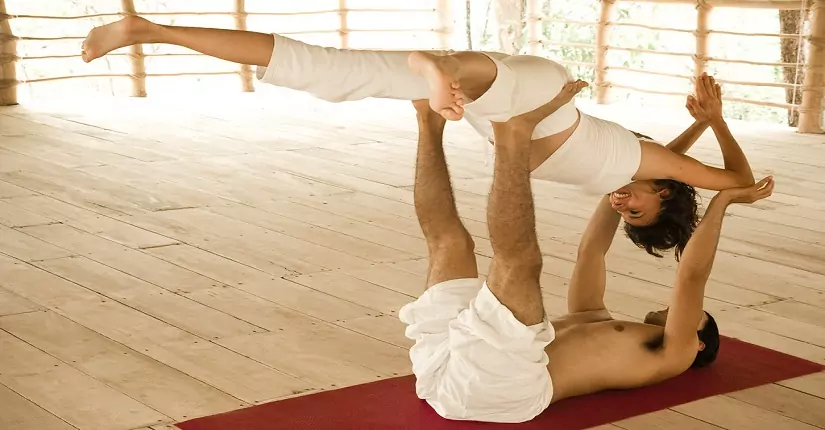
AcroYoga is a form of physical practice that combines acrobatics, yoga, and therapeutic arts. It is typically practiced in pairs or groups and involves a blend of partner acrobatics, yoga poses, and Thai massage techniques. AcroYoga focuses on building trust, communication, and connection between participants.
The practice of AcroYoga can be broken down into three main roles:

Base: The person who remains in contact with the ground, providing a stable foundation for the practice. The base supports and lifts the flyer.

Flyer: The person who is lifted off the ground and moved into various acrobatic positions by the base. The flyer often needs to engage their core and maintain balance.

Spotter: An optional role, the spotter is an additional person who stands nearby to ensure the safety of the base and flyer during more challenging moves. The spotter provides guidance and assistance if needed.

AcroYoga emphasizes communication, trust, and collaboration between participants. It requires a strong sense of body awareness, balance, and flexibility. The practice is known to be both physically demanding and emotionally rewarding, as it fosters a sense of community and connection among practitioners.

How to do AcroYoga

AcroYoga is best learned through structured classes, workshops, or guided sessions led by experienced instructors. If you’re interested in trying AcroYoga, follow these steps to get started:

Find a class or workshop: Look for AcroYoga classes or workshops in your area or nearby communities. Many yoga studios, fitness centers, and AcroYoga communities offer introductory classes for beginners.

Start with a foundation class: If you’re new to AcroYoga, begin with a foundation or beginner-level class. These classes focus on building essential skills, communication, and trust between partners.

Bring a partner or find one: AcroYoga is typically practiced in pairs, so it’s helpful to have a partner to work with. If you don’t have one, check if the class or workshop offers opportunities to pair up with other participants.

Warm-up: Like any physical activity, warm-up before starting AcroYoga to prevent injuries and improve flexibility. Gentle stretches and mobility exercises are beneficial.

Learn the roles: Understand the three main roles in AcroYoga: base, flyer, and spotter. Learn the responsibilities of each role and how to communicate effectively during the practice.

Practice safety and spotting: Safety is paramount in AcroYoga. Learn proper spotting techniques to protect yourself and your partner during challenging moves. Always have a spotter present when attempting more advanced poses.

Start with basic poses: Begin with simple poses and transitions to get comfortable with the movements and build trust with your partner. Some common beginner poses include “Bird,” “Throne,” and “Back Bird.”

Communicate and trust: Open communication between partners is crucial in AcroYoga. Speak openly about your comfort levels, fears, and physical limitations. Trust your partner and develop a strong sense of teamwork.

Progress gradually: As you gain confidence and proficiency, gradually advance to more complex poses and flows. Always prioritize safety and never attempt moves beyond your skill level without proper guidance.

Incorporate therapeutic elements: Explore the therapeutic aspects of AcroYoga, such as Thai massage techniques, to enhance relaxation and healing during the practice.

Benifits of AcroYoga

AcroYoga offers a wide range of physical, mental, and emotional benefits for participants. Here are some of the key advantages of practicing AcroYoga:

Strength and Flexibility: AcroYoga requires participants to engage their muscles, promoting strength and flexibility in both the base and flyer. The dynamic movements and supported stretches help improve overall body flexibility.

Balance and Coordination: AcroYoga challenges individuals to maintain balance and coordination during various poses and transitions. This practice enhances proprioception and body awareness.

Trust and Communication: Working closely with a partner in AcroYoga builds a strong sense of trust and fosters clear communication. Participants learn to listen, communicate effectively, and rely on each other, enhancing interpersonal connections.

Stress Reduction: The practice of AcroYoga involves mindful movement, deep breathing, and partner support, all of which can reduce stress and promote relaxation.

Core Strength: Many AcroYoga poses require active engagement of the core muscles to maintain stability and control. Regular practice helps strengthen the core and improve posture.
Emotional Release: AcroYoga can provide an opportunity for emotional release and expression, especially during therapeutic elements like Thai massage.

Social Connection: AcroYoga often involves group activities, creating a sense of community and belonging. Practitioners can develop strong bonds with their partners and fellow participants.

Playfulness and Joy: AcroYoga encourages a playful and lighthearted approach to movement, fostering a sense of joy and fun during practice.

Improved Body Awareness: Practicing AcroYoga requires participants to be mindful of their body alignment and movements. This heightened body awareness can carry over into everyday life, promoting better posture and alignment.

Increased Self-Confidence: As participants progress in their practice and achieve new poses, they gain a sense of accomplishment and increased self-confidence.

Mind-Body Connection: AcroYoga integrates elements of yoga and acrobatics, promoting a deeper mind-body connection and a sense of being present in the moment.

Empowerment and Support: AcroYoga encourages individuals to step out of their comfort zones, face challenges, and support each other through the process, fostering feelings of empowerment and support.

Posted on Leave a comment

7-Day Online Meditation

Introduction:

In a world that is constantly buzzing with activity and inundated with distractions, finding inner peace and tranquility has become increasingly challenging. Fortunately, the advent of online meditation programs has made it easier than ever to embark on a transformative journey from the comfort of your own home. In this blog, we will explore the profound benefits of a 7-day online meditation experience and how it can positively impact your mental, emotional, and spiritual well-being.

Day 1: Setting the Foundation

The first day of the program sets the stage for the week ahead. Participants are introduced to the fundamental principles and techniques of meditation. They learn about the importance of posture, breath awareness, and cultivating a non-judgmental attitude towards their thoughts and emotions. Guided meditation sessions provide a practical experience of stillness and serve as a gentle initiation into the practice.

Day 2: Cultivating Mindfulness

Day two focuses on the practice of mindfulness, which involves being fully present and aware of the present moment. Participants learn to observe their thoughts, sensations, and emotions without attachment or judgment. Through mindfulness exercises, they develop a heightened sense of self-awareness and gain the ability to respond to life’s challenges with clarity and equanimity.

Day 3: Deepening the Practice

On the third day, participants delve deeper into their meditation practice. They explore various techniques, such as body scan meditation, loving-kindness meditation, or mantra repetition. These practices allow them to explore different aspects of their consciousness and cultivate specific qualities like compassion, gratitude, or inner peace. Participants begin to tap into the transformative power of meditation and experience a deeper sense of connection within themselves and the world around them.

Day 4: Overcoming Challenges

As the week progresses, participants may encounter challenges and obstacles in their meditation practice. Day four is dedicated to understanding and overcoming these hurdles. They receive guidance on dealing with restlessness, wandering thoughts, and other common distractions that may arise during meditation. Through the support and insights of the online community, participants gain valuable tools to navigate these challenges and develop resilience in their practice.

Day 5: Expanding Awareness

The fifth day of the program is dedicated to expanding awareness beyond the meditation cushion. Participants are encouraged to bring mindfulness into their everyday activities, whether it’s eating, walking, or engaging in conversations. They learn to infuse their daily routines with a sense of presence and intentionality, creating a more mindful and fulfilling way of living.

Day 6: Cultivating Stillness

Young sporty people with closed eyes meditating in Savasana pose on floor, practicing yoga at group lesson, doing Corpse exercise on mats, training, working out in modern yoga studio, center

Day six provides an opportunity for participants to deepen their experience of stillness and inner silence. Through guided meditations and periods of extended silence, they embark on a journey of self-discovery and inner exploration. This day offers a respite from the noise and busyness of everyday life, allowing participants to reconnect with their true selves and tap into a profound sense of peace.

Day 7: Integration and Continued Practice

The final day of the program focuses on integrating the lessons learned during the week into daily life. Participants reflect on their experiences and create a plan for sustaining their meditation practice beyond the program. They learn about resources and tools that can support their ongoing journey, such as meditation apps, books, or local meditation groups. The program concludes with a sense of accomplishment and a commitment to continue the practice of meditation as a lifelong endeavor.

Posted on Leave a comment

6 Yoga Poses for Root Chakra to Feel Grounded and Balanced

In today’s fast-paced and hectic world, finding a sense of stability and balance can be challenging. Yoga, an ancient practice that combines physical postures, breathing techniques, and meditation, can help restore harmony within us. Specifically, certain yoga poses target the root chakra, the energy center located at the base of the spine. When the root chakra is balanced, we feel grounded, stable, and connected to the present moment. In this blog post, we will explore six yoga poses that can help activate and harmonize the root chakra, allowing us to experience a greater sense of stability and balance.

Mountain Pose:

The Mountain Pose, or Tadasana, is the foundational pose for grounding and connecting with the earth. Start by standing tall with your feet hip-width apart, grounding them firmly into the ground. Engage your leg muscles and lengthen your spine, imagining a string gently pulling you upwards. Relax your shoulders, close your eyes, and take deep breaths, focusing on the sensation of stability and support beneath your feet. Stay in this pose for 5-10 breaths, feeling the energy flowing down from your crown to your root, grounding you to the present moment.

Warrior I Pose:

Warrior I, or Virabhadrasana I, is a powerful pose that promotes strength, stability, and self-assurance. Begin by stepping your right foot forward into a lunge position, ensuring your knee is directly above your ankle. Rotate your left foot outwards at a 45-degree angle, keeping your back leg straight. Inhale as you lift your arms overhead, reaching towards the sky. Sink your hips down and engage your core, feeling the strength and stability in your legs. Hold this pose for 5-8 breaths before switching sides, allowing the grounding energy to flow through your legs and into the earth.

Bridge Pose:

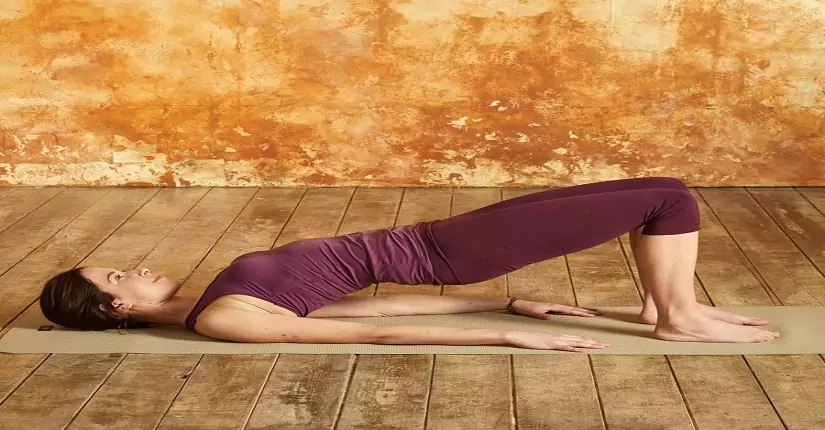
Bridge Pose, or Setu Bandhasana, stimulates and energizes the root chakra while also providing a gentle stretch to the spine and hip flexors. Lie on your back with your knees bent and feet hip-width apart, ensuring your feet are parallel. Place your arms alongside your body, palms facing down. On an inhale, press through your feet and lift your hips off the mat, creating a bridge shape with your body. Squeeze your glutes and engage your core, feeling the strength and stability in your lower body. Breathe deeply and hold the pose for 5-8 breaths, imagining the energy flowing through your spine, grounding you to the earth.

Garland Pose:

Garland Pose, or Malasana, is a deep squat that helps to activate the root chakra while releasing tension from the hips and lower back. Begin by standing with your feet slightly wider than hip-width apart. Slowly lower your hips down towards the ground, coming into a deep squat. Bring your palms together at your heart center and press your elbows against the inside of your knees. Lengthen your spine and relax your shoulders, finding stability and balance in this grounding pose. Take deep breaths and hold the pose for 5-8 breaths, allowing yourself to feel rooted and connected to the earth.

Child’s Pose:

Child’s Pose, or Balasana, is a restorative pose that promotes relaxation, grounding, and introspection. Start by kneeling on the mat with your big toes touching and your knees hip-width apart. Slowly lower your hips towards your heels and fold your torso forward, resting your forehead on the mat. Extend your arms in front of you or alongside your body if that feels more comfortable. Close your eyes and take slow, deep breaths, surrendering any tension or stress. Allow your body to relax into the pose, feeling supported and grounded. Stay in Child’s Pose for 5-10 breaths or longer, as needed, to experience a deep sense of stability and connection.

Tree Pose:

Tree Pose, or Vrikshasana, is a balancing pose that strengthens the legs, improves concentration, and enhances stability. Begin by standing tall with your feet hip-width apart. Shift your weight onto your left foot and bring the sole of your right foot to rest on your left inner thigh, above or below the knee (avoid placing the foot directly on the knee joint). Find your balance and bring your hands together at your heart center in a prayer position. Fix your gaze on a focal point in front of you to help maintain balance. Breathe deeply and feel the grounding energy radiating from your standing foot, up through your body, and into the sky. Hold Tree Pose for 5-8 breaths on each side, feeling rooted and steady like a tree.

Posted on Leave a comment

What is Aerial Yoga

Aerial yoga, also known as anti-gravity yoga, is a unique form of yoga that incorporates elements of traditional yoga, Pilates, and acrobatics. It involves performing various yoga poses and exercises while suspended in a fabric hammock or swing that hangs from the ceiling.
The hammock is made of a strong and supportive fabric that can hold the weight of the practitioner. It is usually hung at waist height or higher, depending on the specific type of aerial yoga practice and the skill level of the participants.
During an aerial yoga session, practitioners use the hammock to support their body weight, allowing them to explore yoga poses in a new and dynamic way. The hammock acts as a prop, providing support, stability, and the ability to achieve deeper stretches and more challenging poses. It also allows for greater freedom of movement, spinal decompression, and the opportunity to practice inversions with less strain on the neck and spine.

How to do Aerial Yoga

Aerial yoga is best learned and practiced under the guidance of a qualified instructor who can provide proper instruction, ensure safety, and assist with adjustments as needed. However, here are some general steps to give you an idea of how aerial yoga is performed:

Find a reputable aerial yoga studio: Look for a local studio that offers aerial yoga classes or workshops. It’s important to learn from experienced instructors who can guide you through the practice safely.
Wear appropriate clothing: Choose comfortable, form-fitting clothing that allows you to move freely. Avoid loose or baggy clothing that may get tangled in the fabric hammock.
Warm up: Begin your aerial yoga session with a warm-up to prepare your body for the practice. This may include gentle stretches, joint mobilization exercises, and breathing techniques.
Set up the aerial hammock: The instructor will guide you in setting up the fabric hammock at the appropriate height and making sure it is securely attached to a sturdy support point. The height may vary depending on the specific poses and skill level.
Learn the basics: In the beginning, you’ll learn foundational poses and techniques that focus on building strength, stability, and body awareness in the hammock. This may include standing poses, seated poses, and supported inversions.
Progress at your own pace: As you become more comfortable and gain strength and confidence, you can gradually progress to more challenging poses and sequences. It’s important to listen to your body, respect your limits, and avoid pushing yourself too hard.
Focus on alignment and breath: Like traditional yoga, aerial yoga emphasizes proper alignment and mindful breathing. Pay attention to your body’s alignment in each pose and breathe deeply and consciously throughout the practice.
Cool down and relax: End your aerial yoga session with a cool-down period that includes gentle stretches and relaxation poses. This allows your body and mind to relax, restore, and integrate the benefits of the practice.

Benifits of Aerial Yoga

Aerial yoga offers a range of benefits for the body, mind, and overall well-being. Some of the key benefits of aerial yoga include:

Improved strength and flexibility: Aerial yoga challenges your muscles in new and dynamic ways, helping to build strength, particularly in the core, arms, and shoulders. The hammock allows for deeper stretches and greater range of motion, promoting flexibility throughout the body.
Spinal decompression: Inversions and hanging positions in aerial yoga help to decompress the spine and alleviate pressure on the vertebrae, discs, and joints. This can provide relief from back pain and improve spinal health.
Enhanced body awareness and mindfulness: Aerial yoga requires concentration and focus as you navigate through poses in the air. This cultivates a heightened sense of body awareness and mindfulness, helping you to be fully present in the moment and connect with your body.
Improved balance and coordination: The unstable nature of the hammock challenges your balance and coordination, leading to improved proprioception and overall body control.
Core strengthening: Many aerial yoga poses engage the core muscles to maintain stability and balance in the hammock. Regular practice can lead to increased core strength and stability.
Increased circulation and lymphatic flow: Aerial yoga involves movements that encourage blood circulation and lymphatic flow throughout the body. This can aid in detoxification, boost the immune system, and improve overall health.
Stress relief and relaxation: Like other forms of yoga, aerial yoga incorporates deep breathing and mindful movement, promoting relaxation and stress reduction. The feeling of being supported and weightless in the hammock can induce a sense of calm and tranquility.
Heightened creativity and playfulness: Aerial yoga encourages exploration, creativity, and a sense of playfulness as you experiment with new movements and positions in the air. It can be an enjoyable and fun way to exercise and express yourself.

Posted on Leave a comment

What is Prenatal Yoga

Prenatal yoga refers to a specialized form of yoga practice designed for pregnant women. It involves gentle stretching, breathing exercises, and meditation techniques tailored to support the physical and emotional well-being of expectant mothers throughout their pregnancy journey.
Prenatal yoga classes are typically led by certified instructors who have training and experience in working with pregnant women. These classes focus on poses and movements that are safe and beneficial for pregnant bodies, taking into account the physical changes and limitations that occur during pregnancy.

How to do Prenatal Yoga

Practicing prenatal yoga can be a wonderful way to support your well-being during pregnancy. Here are some general guidelines and tips to help you get started with prenatal yoga:
Consult with your healthcare provider: Before beginning any exercise program, including prenatal yoga, it’s important to consult with your healthcare provider to ensure that it’s safe for you and your baby.
Find a qualified prenatal yoga instructor: Look for a certified prenatal yoga instructor who has experience working with pregnant women. They can guide you through safe and appropriate practices tailored to your specific needs.
Start with a warm-up: Begin your prenatal yoga practice with a gentle warm-up to prepare your body for movement. This can include gentle stretches and deep breathing exercises.
Focus on gentle and modified poses: Prenatal yoga poses should be modified to accommodate your changing body and ensure safety. Avoid deep twists, intense backbends, and poses that put pressure on your abdomen. Instead, focus on gentle stretches, hip openers, and poses that promote stability and balance.
Use props for support: Props such as bolsters, blankets, and blocks can provide support and help you maintain proper alignment during poses. They can also make certain poses more accessible and comfortable.
Practice breathing exercises: Learning and practicing different breathing techniques can be beneficial during pregnancy and childbirth. Deep breathing, mindful breathing, and techniques like “ujjayi” (victorious) breath can help promote relaxation, reduce stress, and increase your overall sense of well-being.
Listen to your body: Pay attention to how your body feels during the practice. Avoid pushing yourself too hard or straining. Honor your limitations and modify poses as needed. If something doesn’t feel right, stop and rest.
Stay hydrated: Drink plenty of water before, during, and after your prenatal yoga practice to stay hydrated.
Practice relaxation and meditation: Incorporate relaxation techniques and guided meditation into your prenatal yoga practice. This can help you reduce stress, calm your mind, and connect with your baby.
Stay consistent: Regular practice is key to experiencing the benefits of prenatal yoga. Aim for a consistent practice schedule that works for you, whether it’s attending prenatal yoga classes or practicing at home.

Benifits of Prenatal Yoga

The benefits of prenatal yoga can include:
Physical well-being: Prenatal yoga helps to improve flexibility, strength, and endurance. It can alleviate common discomforts of pregnancy such as back pain, swollen ankles, and sciatica. The gentle stretching and movements also promote better posture and body awareness.
Stress reduction: Pregnancy can bring about various emotional and hormonal changes, leading to increased stress and anxiety. Prenatal yoga incorporates relaxation techniques, breathing exercises, and meditation, which can help reduce stress levels, promote relaxation, and improve sleep quality.
Preparation for childbirth: Prenatal yoga can enhance the expectant mother’s physical and mental preparation for labor and delivery. The breathing exercises and relaxation techniques learned in prenatal yoga can be useful during contractions and help with pain management during childbirth.
Bonding with the baby: Prenatal yoga provides an opportunity for pregnant women to connect with their growing baby. The focused movements, gentle touch, and mindful awareness can foster a sense of connection and facilitate a deeper bond between the mother and child.

Posted on Leave a comment

Why Yoga Expert are needed

Yoga experts are needed to guide and instruct practitioners, ensuring proper alignment, technique, and safety, while deepening their understanding and experience of yoga.

Here are some ancient Indian yoga gurus-

Patanjali

Patanjali is often regarded as the father of classical yoga. He compiled the Yoga Sutras, a foundational text of yoga philosophy. His teachings provide a systematic framework for achieving self-realization through the practice of yoga, encompassing the eight limbs of yoga.

Swami Vivekananda

Swami Vivekananda was a renowned Indian monk and philosopher who played a pivotal role in introducing yoga and Vedanta to the Western world. He emphasized the practical aspects of yoga as a means to attain spiritual growth and self-realization.

Tirumalai Krishnamacharya

Krishnamacharya is considered one of the most influential yoga teachers of the 20th century. He revitalized and modernized the practice of yoga, combining elements from ancient texts with his own innovative methods. Krishnamacharya’s teachings laid the foundation for various yoga styles, including Ashtanga, Iyengar, and Viniyoga.

Sri T. Krishnamacharya

Sri T. Krishnamacharya was the father of T.K.V. Desikachar and the teacher of B.K.S. Iyengar and Pattabhi Jois. He played a crucial role in spreading yoga throughout India. Krishnamacharya emphasized the therapeutic aspects of yoga and tailored his teachings to suit individual needs.

B.K.S. Iyengar

Bellur Krishnamachar Sundararaja Iyengar, known as B.K.S. Iyengar, developed the style of yoga that bears his name—Iyengar Yoga. He focused on precision and alignment in the practice of asanas (postures) and emphasized the use of props to make yoga accessible to people of all abilities. Iyengar’s teachings have had a profound impact on yoga worldwide.

Why one can choose Indian Yoga Expert

Indian Yoga Expert Would provide valuable information on Indian yoga experts, their teachings, and the principles of yoga. It could offer resources for learning different yoga techniques, meditation practices, or philosophy.

Posted on Leave a comment

What is Restorative Yoga

Restorative yoga is a gentle and therapeutic style of yoga that focuses on relaxation, rejuvenation, and healing. It involves holding passive yoga poses for an extended period of time, typically ranging from 5 to 20 minutes. The aim is to promote deep relaxation, release tension, and restore balance to the body and mind.
Restorative yoga is often practiced with the support of props such as bolsters, blankets, blocks, and straps. These props are used to provide comfort, support, and stability, allowing the body to fully relax into each pose without exerting effort or strain. By using props, the body is able to release tension, stretch gently, and experience a sense of openness and ease.
The emphasis in restorative yoga is on slowing down, deepening the breath, and calming the nervous system. The extended holds in each pose encourage the activation of the parasympathetic nervous system, which promotes the body’s relaxation response. This can help to reduce stress, relieve anxiety, and improve overall well-being.
Restorative yoga is suitable for individuals of all fitness levels, including those recovering from injuries or experiencing chronic pain or fatigue. It can be particularly beneficial for individuals who lead busy and stressful lives, as it offers an opportunity for deep rest and rejuvenation.

How to do Restorative Yoga

To practice restorative yoga, follow these general guidelines:

Set up a quiet and comfortable space: Find a quiet area where you can practice without distractions. Use a yoga mat or a soft surface such as a carpet. Gather the necessary props like blankets, bolsters, pillows, blocks, and straps.
Choose your poses: Select a few restorative yoga poses that you feel drawn to or that target specific areas of tension or discomfort. Common restorative poses include Child’s Pose, Supported Bridge Pose, Legs-Up-The-Wall Pose, and Reclining Bound Angle Pose.
Gather your props: Arrange your props near your mat for easy access. Use blankets to create supportive layers, bolsters or pillows for extra cushioning, blocks or folded blankets for height adjustments, and straps to assist in maintaining proper alignment.
Settle into the pose: Begin by assuming a comfortable position on your mat. Use your props to support your body in the desired pose. Ensure that you are fully supported and that you can relax completely without any strain or discomfort.
Relax and breathe: Once in the pose, focus on your breath and allow yourself to fully relax. Take slow, deep breaths, allowing the breath to flow naturally and effortlessly. With each exhalation, release tension and sink deeper into the pose.
Stay in the pose: Restorative poses are typically held for an extended period, anywhere from 5 to 20 minutes. The duration can vary based on your comfort level and the time you have available. Use a timer or a gentle alarm to help you keep track of the time.
Transition mindfully: When you’re ready to move out of the pose, do so slowly and mindfully. Make gentle adjustments to release props and transition to the next pose. Take your time and maintain the sense of relaxation you cultivated during the practice.
Practice self-care: After your restorative yoga practice, take a few moments to rest and integrate the effects of the poses. You may choose to lie down in Savasana (Corpse Pose) or sit quietly in meditation. Drink water and engage in any additional self-care practices that support your well-being.

Benifits of Restorative Yoga

Restorative yoga offers a wide range of benefits for both the body and the mind. Some of the key benefits of practicing restorative yoga include:

Deep relaxation: Restorative yoga promotes deep relaxation by activating the parasympathetic nervous system, which helps counteract the effects of stress and promotes a sense of calm and well-being.
Stress reduction: The slow and gentle nature of restorative yoga, combined with focused breathing, helps to release tension and reduce stress levels. It can be particularly beneficial for individuals who experience high levels of stress or anxiety.
Improved sleep quality: Restorative yoga can help improve the quality of sleep by inducing relaxation and reducing the racing thoughts and physical tension that can interfere with a restful night’s sleep.
Enhanced flexibility and mobility: Restorative yoga poses gently stretch and release tension in the muscles, promoting increased flexibility and joint mobility over time. It can be especially helpful for individuals with limited mobility or those recovering from injuries.
Relieves chronic pain: The supportive props used in restorative yoga help to alleviate pressure on the joints and muscles, reducing chronic pain and discomfort. It can be beneficial for individuals with conditions such as arthritis, fibromyalgia, or back pain.
Balances the nervous system: Restorative yoga helps rebalance the autonomic nervous system by stimulating the parasympathetic response. This can lead to a reduction in blood pressure, heart rate, and overall stress levels.
Boosts immune function: The deep relaxation and stress reduction achieved through restorative yoga can have positive effects on the immune system. By reducing stress hormones, the body’s immune response can function more efficiently.
Emotional healing and self-awareness: Restorative yoga encourages introspection and self-reflection. It provides an opportunity to connect with and process emotions, promoting emotional healing and self-awareness.
Cultivates mindfulness: Restorative yoga emphasizes being present in the moment and tuning into bodily sensations and breath. This mindfulness practice can extend beyond the yoga mat, helping to cultivate a greater sense of mindfulness and awareness in daily life.
Supports overall well-being: By promoting relaxation, reducing stress, and improving physical and mental health, restorative yoga supports overall well-being and a balanced lifestyle.

Posted on Leave a comment

What is Power Yoga

Power Yoga, also known as Vinyasa or Power Vinyasa Yoga, is a modern style of yoga that emerged in the 1990s. Developed by American yoga teachers seeking to make yoga more accessible and appealing to fitness enthusiasts, Power Yoga draws inspiration from Ashtanga Yoga but offers more flexibility and creativity in sequencing.
Unlike other traditional forms of yoga that emphasize stillness and holding poses for an extended period, Power Yoga focuses on continuous movement and a flowing sequence of postures. It combines dynamic, strength-building exercises with breath control and meditation techniques, creating a vigorous and energetic practice.

How To Do Power Yoga
Power Yoga is a dynamic and challenging form of yoga that combines flowing sequences, strength-building poses, and mindful breathing. Here’s a step-by-step guide on how to do Power Yoga:

1. Warm-up: Start with a brief warm-up to prepare your body for the practice. This can include gentle stretches, neck rolls, shoulder rotations, and a few rounds of Sun Salutations to awaken the body.
2. Set an Intention: Take a moment to set an intention for your practice. It could be anything from increasing strength and flexibility to finding inner peace and balance.
3. Sun Salutations: Begin with a few rounds of Sun Salutations (Surya Namaskar) to warm up the body and build heat. Sun Salutations involve a sequence of poses that flow together, typically including forward folds, lunges, and upward-facing dog.
4. Flowing Sequences: Power Yoga is characterized by continuous movement and flowing sequences. Move through a series of poses, linking them together with smooth transitions. Common sequences include warrior poses, standing balances, lunges, and twists. Maintain a steady breath throughout the practice, synchronizing it with your movements.
5. Strength-Building Poses: Incorporate poses that challenge and strengthen your muscles. Include standing poses like Chair Pose (Utkatasana), Warrior II (Virabhadrasana II), and balancing poses like Tree Pose (Vrikshasana) or Eagle Pose (Garudasana). Poses like Plank, Chaturanga Dandasana (Low Plank), and Boat Pose (Navasana) are also effective for building core strength.
6. Mindful Breathing: Pay attention to your breath throughout the practice. Practice Ujjayi breath, a deep and audible breath that helps calm the mind and generate internal heat. Inhale deeply through the nose, filling the lungs, and exhale slowly through the nose, making a soft “ha” sound.
7. Modifications and Rest: Power Yoga can be intense, so listen to your body and modify poses as needed. Take breaks when necessary and rest in Child’s Pose (Balasana) or Downward-Facing Dog (Adho Mukha Svanasana) to catch your breath and regain energy.
8. Cool Down and Stretch: Towards the end of your practice, include a cool-down sequence to stretch and lengthen the muscles you’ve worked. This can involve gentle seated forward folds, hip openers, and spinal twists. Finish with a few minutes in Savasana (Corpse Pose) to relax the body and mind.
9. Closing and Reflection: Take a moment to acknowledge your practice, express gratitude for your body, and reflect on any insights or sensations you experienced during the practice

Benifits Of Power Yoga
Physical Strength and Flexibility: Power Yoga is an excellent way to build lean muscle mass and increase overall strength. It targets various muscle groups and helps improve flexibility, promoting better posture and reducing the risk of injuries.
Weight Management: The dynamic and high-intensity nature of Power Yoga contributes to calorie burning and weight loss. Regular practice can boost metabolism and improve cardiovascular health.
Stress Relief and Mental Clarity: Like any form of yoga, Power Yoga incorporates meditation and mindfulness techniques. It offers a space for practitioners to cultivate inner peace, reduce stress levels, and enhance mental clarity.
Improved Body Awareness: Power Yoga encourages practitioners to connect with their bodies, promoting a heightened sense of body awareness and self-acceptance. This increased body-mind connection can positively impact daily activities and overall well-being.
Energy and Vitality: Power Yoga’s dynamic nature stimulates the body’s energy systems, leaving practitioners feeling invigorated and revitalized. Regular practice can increase energy levels, improve focus, and enhance productivity

Posted on Leave a comment

What is Bikram Yoga

Bikram Yoga is a style of yoga developed by Bikram Choudhury in the 1970s. It is a specific sequence of yoga poses (asanas) practiced in a heated room. The typical Bikram Yoga class consists of a series of 26 poses and two breathing exercises, all performed in a specific order.
The classes are conducted in a room heated to around 105 degrees Fahrenheit (40 degrees Celsius) with a humidity level of 40%. The heat and humidity are intended to enhance flexibility, increase circulation, and promote detoxification through sweating.
Bikram Yoga classes follow a fixed sequence, with each pose targeting specific parts of the body. The sequence is designed to work on strength, flexibility, balance, and endurance. The practice typically lasts 90 minutes and is practiced in a mirror-lined room to help practitioners observe their alignment and form.
Bikram Choudhury patented his sequence of poses and established a copyrighted format for teaching Bikram Yoga, including specific dialogue cues for instructors to follow. This led to a unique and consistent experience across different Bikram Yoga studios.
It’s important to note that Bikram Choudhury has been involved in controversial legal issues and allegations of misconduct. However, many yoga studios have adapted similar hot yoga practices without using the Bikram name or specific sequence, offering similar heated yoga classes with variations in the pose sequence and room temperature.

How to do bikram yoga

To practice Bikram Yoga, follow these general guidelines:
Find a studio: Look for a Bikram Yoga studio in your area. It’s best to learn the practice from a certified instructor who can guide you through the sequence and provide proper guidance.
Dress appropriately: Wear lightweight and breathable clothing that allows you to move comfortably. Avoid heavy fabrics that may restrict your movements.
Hydrate: Drink plenty of water before, during, and after the class to stay hydrated, as Bikram Yoga is practiced in a heated room.
Arrive early: Arrive at the studio early to sign in, set up your mat, and acclimate to the heat.
Warm-up: The class usually starts with a few minutes of breathing exercises to center yourself and prepare for the practice.
Follow the sequence: The instructor will guide you through a specific sequence of 26 poses, each held for a specific duration. Listen to the instructor’s cues and follow along to the best of your ability. The poses are designed to work different parts of your body and improve flexibility, strength, and balance.
Mind your breathing: Pay attention to your breath throughout the practice. Bikram Yoga emphasizes deep breathing through the nose and controlled exhalations.
Stay hydrated and take breaks: The heat and intensity of the practice can be challenging, so it’s important to listen to your body. If you feel overwhelmed or dizzy, take a break, rest, and drink water as needed.
Be mindful of your limits: Respect your body’s limits and avoid pushing yourself beyond what feels comfortable. It’s normal to experience discomfort and a challenging workout, but avoid pushing into pain or overexertion.
Cool down and relax: The class typically ends with a few minutes of relaxation and a final resting pose, such as Savasana, to allow your body to cool down and integrate the benefits of the practice.

Benefits of Bikram Yoga

Bikram Yoga is believed to offer several potential benefits for the mind and body. Here are some commonly reported benefits:
Improved flexibility: The heated environment of Bikram Yoga helps warm up the muscles, allowing for deeper stretches and increased flexibility over time. Regular practice can help improve range of motion and joint mobility.
Increased strength and muscle tone: The series of poses in Bikram Yoga target various muscle groups, helping to build strength, especially in the core, legs, and upper body. Holding the poses and repeating them over time can lead to improved muscle tone and endurance.
Enhanced cardiovascular fitness: The combination of heat and continuous movement in Bikram Yoga can provide a cardiovascular workout, increasing heart rate and promoting better cardiovascular health. The practice can help improve stamina and lung capacity.
Weight management: Bikram Yoga is a physically demanding practice that can contribute to weight loss and weight management when combined with a balanced diet and a healthy lifestyle. The heat and intensity of the practice can lead to increased calorie burn and improved metabolism.
Stress reduction: Like other forms of yoga, Bikram Yoga emphasizes mindful breathing and focus, which can help calm the mind, reduce stress, and promote relaxation. The meditative aspects of the practice may also improve mental clarity and promote a sense of well-being.
Detoxification: The heat and intense sweating in Bikram Yoga are believed to aid in detoxification by helping to eliminate toxins from the body through the skin. However, the scientific evidence supporting this specific claim is limited.
Improved balance and coordination: The series of poses in Bikram Yoga challenge balance and proprioception (body awareness), helping to improve coordination and stability over time.

Posted on Leave a comment

What is Iyengar Yoga

Iyengar Yoga is a style of yoga developed by B.K.S. Iyengar, a renowned yoga teacher from India. It is a form of Hatha Yoga that focuses on precision, alignment, and the use of props to support the body in various yoga poses. The practice of Iyengar Yoga aims to cultivate strength, flexibility, stability, and body awareness.
B.K.S. Iyengar developed this style of yoga in the 20th century and emphasized the importance of correct alignment in each pose. He believed that proper alignment not only helps to prevent injury but also enables the practitioner to achieve deeper levels of awareness and benefits from the poses.
In Iyengar Yoga, props such as blocks, belts, blankets, and chairs are commonly used to assist practitioners in achieving the correct alignment and to modify poses according to individual needs and abilities. The props provide support and enable practitioners of all levels, including beginners and those with physical limitations, to access the benefits of each pose.
Iyengar Yoga classes typically follow a structured sequence and focus on a wide range of asanas (poses) with attention to detail and precise instructions. Teachers of Iyengar Yoga undergo extensive training and certification to ensure a high standard of teaching.
The practice of Iyengar Yoga is known for its therapeutic applications and is often used to address specific health conditions or to aid in injury recovery. It also emphasizes the integration of yoga philosophy into the practice, promoting self-awareness and mindfulness.
Overall, Iyengar Yoga is a methodical and disciplined approach to yoga that emphasizes alignment, precision, and the use of props to achieve physical and mental well-being

How To do Iyengar Yoga

Practicing Iyengar Yoga involves following a structured sequence of asanas (poses) with a focus on precision and alignment. Here are some general guidelines to get started with Iyengar Yoga:
Find a qualified teacher: Iyengar Yoga is best learned under the guidance of a certified Iyengar Yoga teacher who can provide proper instructions and adjustments based on your individual needs and abilities. Look for a reputable yoga studio or teacher in your area.
Start with the basics: Beginners in Iyengar Yoga often begin with foundational poses to develop body awareness and alignment. These poses may include Tadasana (Mountain Pose), Uttanasana (Standing Forward Bend), Adho Mukha Svanasana (Downward-Facing Dog), and Savasana (Corpse Pose).
Focus on alignment: Pay attention to the alignment of your body in each pose. Follow the instructions of your teacher regarding the placement of your feet, hands, and other body parts. Proper alignment helps to prevent injuries and ensures maximum benefits from the poses.
Use props: Props such as blocks, straps, blankets, and chairs are integral to Iyengar Yoga. They assist in achieving correct alignment and provide support. Your teacher will guide you on how to use props effectively for your practice.
Practice with awareness: Iyengar Yoga emphasizes mindfulness and self-awareness. As you move through the poses, observe your breath, sensations in your body, and thoughts that arise. Cultivate a sense of presence and focus on the present moment.
Gradually progress: Iyengar Yoga encourages a gradual progression in the practice. Start with basic poses and gradually incorporate more challenging poses as your strength and flexibility improve. Always listen to your body and avoid pushing yourself beyond your limits.
Regular practice: Consistency is key in Iyengar Yoga. Aim to practice regularly, even if it’s for a shorter duration. Regular practice allows for a deeper understanding of the poses and their effects on your body and mind.

Benifits of Iyenger Yoga

Iyengar Yoga offers numerous benefits for both the body and mind. Here are some key benefits of practicing Iyengar Yoga:

Improved flexibility: Iyengar Yoga emphasizes stretching and lengthening the muscles, gradually improving flexibility and range of motion in the body. With regular practice, you can experience increased suppleness and ease of movement.
Enhanced strength and stability: Iyengar Yoga builds strength in the body through sustained holds in poses, particularly in standing poses and inversions. The practice also focuses on developing core stability, which helps in maintaining proper alignment and balance.
Corrected posture and alignment: Iyengar Yoga emphasizes precise alignment in each pose. This attention to detail helps in correcting postural imbalances and promotes a healthier posture both on and off the mat. Proper alignment also reduces the risk of injuries.
Increased body awareness: Through the practice of Iyengar Yoga, you develop a heightened sense of body awareness. You learn to observe and understand how your body moves, its limitations, and areas of tension or weakness. This awareness can be carried into everyday life, promoting better self-care and body mechanics.
Stress relief and relaxation: Iyengar Yoga incorporates relaxation techniques, such as Savasana (Corpse Pose), and encourages deep breathing and mindful presence. These practices promote relaxation, reduce stress, and help in calming the mind.
Therapeutic benefits: Iyengar Yoga is known for its therapeutic applications. It can be adapted to address specific health conditions, injuries, or limitations. The use of props in Iyengar Yoga assists in modifying poses and making them accessible to individuals with varying needs.
Improved focus and mental clarity: Iyengar Yoga requires concentration and focus on precise alignment and adjustments. This concentration helps to calm the mind, enhance mental clarity, and improve overall cognitive function.
Increased energy and vitality: The practice of Iyengar Yoga stimulates and balances the body’s energy flow. It helps in releasing physical and mental blockages, leaving you feeling energized and revitalized.
Cultivation of self-discipline and patience: Iyengar Yoga is a disciplined practice that requires commitment and patience. Regular practice helps in developing self-discipline, perseverance, and the ability to stay present even in challenging poses or situations.
Integration of body, mind, and spirit: Iyengar Yoga aims to bring harmony and integration to all aspects of the individual – physical, mental, and spiritual. The practice encourages self-reflection, self-discovery, and the development of a deeper connection with oneself.
It’s important to note that individual experiences may vary, and the benefits of Iyengar Yoga can be subjective. It’s always recommended to practice under the guidance of a qualified Iyengar Yoga teacher to maximize the benefits and ensure safe and effective practice.

Posted on Leave a comment

What is Yin Yoga

Yin yoga is a slow-paced and passive style of yoga that targets the deep connective tissues of the body, such as the ligaments, joints, and fascia. It is a relatively modern form of yoga developed in the late 1970s by martial arts expert and yoga teacher Paulie Zink, and later popularized by Paul Grilley and Sarah Powers.
In yin yoga, the focus is on holding passive yoga poses for an extended period, typically ranging from 3 to 5 minutes or even longer. Unlike more dynamic and active styles of yoga, yin yoga poses are practiced with relaxed muscles, allowing the body’s weight and gravity to create gentle, sustained stretching and compression of the targeted tissues.
The practice of yin yoga is based on the concept of “yin” and “yang” energies in the body. Yin represents the passive, cool, and receptive aspects, while yang represents the active, warm, and dynamic aspects. In yin yoga, the intention is to balance these energies by targeting the yin tissues that are typically not stimulated in more yang-oriented practices.
How to do Yin Yoga
To practice yin yoga, find a quiet and comfortable space where you can relax without interruptions. Here are the basic steps:

Choose your poses: Select a few yin yoga poses that target different areas of your body. These poses are typically seated or reclined and involve gentle stretches. Examples include Butterfly Pose, Child’s Pose, and Dragon Pose.
Set up your props: Gather any props that may enhance your comfort, such as bolsters, blankets, or blocks. These props can be used to support your body and help you find a relaxed and sustainable stretch in each pose.
Find your edge: Slowly move into the chosen pose and find a position that offers a gentle stretch. Listen to your body and avoid any sharp or intense pain. Yin yoga focuses on finding a sensation that is neither too intense nor too mild, often described as a 6 out of 10 in terms of intensity.
Hold the pose: Once you’ve settled into the pose, aim to hold it for an extended period, typically 3 to 5 minutes or longer. Relax your muscles as much as possible, allowing gravity to gently deepen the stretch. Focus on your breath and cultivate a sense of calm and surrender.
Transition mindfully: When you’re ready to move out of the pose, do so slowly and mindfully. Take a moment to notice any sensations or changes in your body before transitioning to the next pose.
Repeat and rest: Repeat this process with other yin yoga poses, targeting different areas of the body. After your practice, take a few minutes in a comfortable position, such as Savasana (Corpse Pose), to integrate the effects of the practice and allow your body to rest and rejuvenate.
Benefits of Yin Yoga
Yin yoga offers a variety of benefits for the body, mind, and overall well-being. Some of the key benefits of practicing yin yoga include:
Increased flexibility: Yin yoga targets the deep connective tissues, such as ligaments, joints, and fascia, which tend to be less elastic than muscles. The long holds in yin poses gently stretch and lengthen these tissues, improving flexibility and joint mobility.
Stress reduction and relaxation: The slow-paced nature of yin yoga, combined with deep breathing and mindfulness, promotes relaxation and helps activate the parasympathetic nervous system, leading to a reduction in stress levels and an overall sense of calm.
Improved energy flow: Yin yoga poses often involve gentle compression and tension on the body, which can stimulate the flow of energy or “qi” in the meridian channels of the body according to traditional Chinese medicine. This can help balance and harmonize the body’s energy system.
Enhanced self-awareness and mindfulness: Yin yoga encourages the cultivation of present-moment awareness. As you hold the poses for an extended period, you have the opportunity to observe physical sensations, thoughts, and emotions that arise, promoting self-reflection and deepening your mindfulness practice.
Joint health and injury prevention: By targeting the connective tissues and promoting joint mobility, yin yoga can help maintain healthy joint function and reduce the risk of injuries. It can also be beneficial for individuals with conditions such as arthritis, as it gently nourishes and lubricates the joints.
Calming the nervous system: Yin yoga activates the relaxation response in the body, which can help reduce anxiety, improve sleep quality, and balance the autonomic nervous system. It can be particularly beneficial for individuals dealing with chronic stress or fatigue.
Deep relaxation and meditation: Yin yoga prepares the body and mind for deeper states of relaxation and meditation. The prolonged holds and focus on breath and stillness create a conducive environment for cultivating a meditative state, leading to enhanced mental clarity and inner peace.
Improved circulation and organ health: The gentle compression and release in yin yoga poses can stimulate blood flow and improve circulation, nourishing the organs and promoting overall health and vitality.

Posted on Leave a comment

What is Ashtanga Yoga

Ashtanga Yoga is a dynamic and physically demanding style of yoga that focuses on synchronizing breath with a progressive series of postures. It is a traditional and structured form of yoga that was popularized by Sri K. Pattabhi Jois, an Indian yoga teacher.
The term “Ashtanga” translates to “eight limbs” in Sanskrit, referring to the eightfold path outlined in the Yoga Sutras of Patanjali. However, in the context of Ashtanga Yoga, it specifically refers to the sequence of postures and the method of practice.
Ashtanga Yoga emphasizes the tristhana method, which involves the coordination of breath (ujjayi pranayama), energy locks (bandhas), and focused gaze (dristi) during the practice. This combination creates a moving meditation, enhancing concentration and internal awareness.

How to do Ashtanga Yoga

Practicing Ashtanga Yoga involves a specific sequence of postures and a disciplined approach. Here are the general steps to practice Ashtanga Yoga:
Find a Qualified Teacher: It’s recommended to learn Ashtanga Yoga from a qualified teacher who can guide you through the practice and ensure proper alignment and technique.
Familiarize Yourself with the Sequence: Ashtanga Yoga follows a specific sequence of postures. Familiarize yourself with the primary series, which is the foundation of the practice. You can find resources, such as books, videos, or online tutorials, to learn the sequence.
Warm Up: Begin your practice with a few minutes of gentle warm-up exercises, such as joint rotations, neck movements, and gentle stretches. This helps prepare the body for the more challenging postures.
Practice Sun Salutations: Ashtanga Yoga typically starts with a series of Sun Salutations (Surya Namaskar A and B). These flowing sequences of movements warm up the entire body and synchronize breath with movement.
Move through the Sequence: After the Sun Salutations, move through the standing postures, seated postures, and the closing sequence as per the Ashtanga Yoga primary series. Each posture should be practiced with steady breathing and proper alignment. Start with the postures you have learned and gradually add new ones as you progress.
Focus on Breath, Bandhas, and Dristi: Throughout the practice, maintain awareness of your breath (ujjayi pranayama), engage the energy locks (bandhas) to create internal stability, and direct your gaze (dristi) to specific points to enhance concentration.
Modify and Adapt: Ashtanga Yoga is challenging, and it’s important to listen to your body and modify or adapt the postures as needed. Work within your limits and avoid pushing yourself into pain or discomfort.
Practice Regularly: Ashtanga Yoga is traditionally practiced six days a week, with one day of rest (usually Saturday or moon days). Consistency and regularity are key to progress in the practice.

Benifits of Ashtanga Yoga
Ashtanga Yoga offers a wide range of benefits for both the body and the mind. Here are some of the key benefits associated with practicing Ashtanga Yoga:
Physical Strength and Flexibility: Ashtanga Yoga is a physically demanding practice that helps develop strength, stamina, and flexibility. The sequence of postures targets various muscle groups, increasing overall body strength and enhancing flexibility and range of motion.
Improved Cardiovascular Health: The dynamic nature of Ashtanga Yoga, combined with the synchronization of breath and movement, creates a cardiovascular workout. Regular practice can help improve heart health, increase lung capacity, and enhance overall fitness.
Body Detoxification: The practice of Ashtanga Yoga involves a series of postures that generate internal heat, leading to increased sweating and detoxification. This process helps purify the body by eliminating toxins and impurities through sweat.
Stress Reduction and Mental Clarity: Ashtanga Yoga incorporates breath control and concentration techniques, promoting a meditative state of mind. The focused and rhythmic breathing helps calm the nervous system, reduce stress, and enhance mental clarity and focus.
Increased Body Awareness: Through the practice of Ashtanga Yoga, you develop a deep sense of body awareness. Paying attention to alignment, breath, and the sensations in your body during each posture cultivates mindfulness and a better understanding of your body’s needs and limitations.
Enhanced Balance and Coordination: Ashtanga Yoga includes balancing postures that require focus, stability, and coordination. Regular practice improves balance, proprioception, and body coordination.
Improved Posture and Alignment: Ashtanga Yoga emphasizes proper alignment and posture in each pose. With consistent practice, you develop better posture habits and alignment, which can help alleviate muscular imbalances and reduce the risk of injuries.
Increased Energy and Vitality: Ashtanga Yoga is an invigorating practice that boosts energy levels and promotes a sense of vitality. The combination of physical movement, breath control, and focused attention awakens the body’s energy centers, leaving you feeling energized and refreshed.
Mind-Body Connection: Ashtanga Yoga integrates physical movement, breath, and mental focus, fostering a deep mind-body connection. This connection can lead to a greater sense of self-awareness, self-discovery, and overall well-being.
Discipline and Self-Reflection: Ashtanga Yoga is traditionally practiced with discipline and consistency. The commitment to a regular practice cultivates self-discipline, patience, and self-reflection, fostering personal growth and self-transformation.
It’s important to note that individual experiences and benefits may vary, and it’s always recommended to practice under the guidance of a qualified teacher to ensure a safe and effective practice.

Posted on Leave a comment

What is Vinyasa Yoga

Vinyasa Yoga is a popular style of yoga that focuses on the synchronization of breath and movement. In Sanskrit, “Vinyasa” means “to place in a special way,” indicating the intentional sequencing of yoga poses in a flowing manner.

In a Vinyasa Yoga practice, participants move through a series of poses, transitioning smoothly from one posture to another, often guided by the breath. Each movement is coordinated with an inhale or an exhale, creating a continuous, dynamic flow.

Vinyasa Yoga is known for its fluidity, creativity, and variety. While there are traditional sequences and poses, teachers have the freedom to design their classes and incorporate different postures, making each session unique. The practice typically includes a combination of standing, seated, balancing, and inverted poses, offering a full-body workout that enhances strength, flexibility, and mindfulness.

The breath plays a vital role in Vinyasa Yoga. Practitioners are encouraged to synchronize their breath with each movement, using deep, conscious inhales and exhales. This focus on breath control helps to cultivate a meditative state of mind, promoting relaxation, concentration, and a deeper connection between the body and the mind.

Vinyasa Yoga offers numerous benefits, including improved physical fitness, increased energy levels, enhanced flexibility and balance, stress reduction, and a sense of inner calm. It is suitable for practitioners of various levels, as modifications and variations can be made to accommodate different abilities and needs.

Whether you’re a beginner or an experienced yogi, Vinyasa Yoga offers an invigorating and dynamic practice that brings harmony to the body, mind, and breath.

How to do Vinyasa Yoga

To practice Vinyasa Yoga, follow these general steps:

Find a suitable space: Choose a quiet and well-ventilated area with enough room for you to move freely without any obstructions.

Get your yoga mat: Lay your yoga mat on the floor to provide a comfortable and non-slip surface for your practice.

Begin with centering: Sit in a comfortable cross-legged position, close your eyes, and take a few deep breaths to center yourself and establish a sense of mindfulness.

Warm-up and Sun Salutations: Start with a few gentle warm-up exercises to awaken your body. Then, move into a series of Sun Salutations (Surya Namaskar), which typically include a sequence of poses that flow together with the breath.

Flow through poses: Continue moving through a series of yoga poses, connecting each posture with your breath. The sequences can vary, but common poses in Vinyasa Yoga include Downward Facing Dog (Adho Mukha Svanasana), Plank Pose, Chaturanga Dandasana, Upward Facing Dog (Urdhva Mukha Svanasana), and Warrior Poses (Virabhadrasana series).

Maintain breath awareness: Throughout your practice, pay attention to your breath. Inhale deeply as you move into a pose, and exhale as you transition or deepen into it. Keep the breath smooth, steady, and controlled.

Modify as needed: Vinyasa Yoga allows for modifications and variations. If a pose feels challenging or uncomfortable, feel free to modify it to suit your body’s capabilities. Listen to your body and honor its limits.

Cool-down and Savasana: Towards the end of your practice, gradually slow down the pace and transition into gentler poses or seated stretches. Finally, conclude your practice with Savasana (Corpse Pose), lying flat on your back with your arms and legs relaxed, allowing your body to fully rest and integrate the benefits of your practice.

Benefits of Vinyasa Yoga
Vinyasa Yoga offers a wide range of benefits for the body, mind, and overall well-being. Here are some key benefits of practicing Vinyasa Yoga:

Physical fitness: Vinyasa Yoga provides a full-body workout, improving strength, flexibility, and balance. The continuous flow of poses builds muscular endurance and tone, enhances joint mobility, and increases overall body awareness.

Cardiovascular health: The dynamic and rhythmic nature of Vinyasa Yoga increases heart rate, promoting cardiovascular health and improving circulation. Regular practice can contribute to improved stamina and cardiovascular endurance.

Stress reduction: Vinyasa Yoga incorporates breath awareness and mindful movement, which helps reduce stress and promote relaxation. The focus on the breath and the present moment encourages a sense of calm, alleviating anxiety and promoting mental well-being.

Mind-body connection: Vinyasa Yoga emphasizes the synchronization of breath and movement. This cultivates a deep connection between the body and the mind, fostering mindfulness and enhancing body awareness. Practitioners learn to be fully present in the current moment and develop a greater understanding of their physical and mental states.

Increased energy and vitality: Vinyasa Yoga stimulates the body’s energy flow through the combination of breath and movement. The practice can help increase energy levels, invigorate the body, and uplift the mood. It can also help combat feelings of fatigue and improve overall vitality.

Improved flexibility and mobility: Vinyasa Yoga incorporates a wide range of poses that promote flexibility and enhance joint mobility. Regular practice gradually increases flexibility, making everyday movements easier and reducing the risk of injuries.

Mental focus and concentration: The mindful nature of Vinyasa Yoga requires focus and concentration. As practitioners move through the sequences with intention and awareness, they develop mental clarity, improve concentration, and enhance cognitive function.

Emotional balance: Vinyasa Yoga can help balance emotions and enhance emotional well-being. The combination of movement, breath, and mindfulness can reduce negative emotions, promote positive feelings, and provide a sense of inner calm and balance.

Body detoxification: The combination of dynamic movements, deep breathing, and increased circulation in Vinyasa Yoga supports the body’s natural detoxification process. Sweating during the practice helps release toxins, cleanse the body, and promote overall well-being.

Self-expression and creativity: Vinyasa Yoga offers a creative and flowing practice where practitioners have the freedom to explore and express themselves through movement. It encourages self-expression, fosters creativity, and allows individuals to personalize their practice.

Posted on Leave a comment

What is Kundalini Yoga?

Kundalini Yoga is a form of yoga that emphasizes activating the Kundalini energy that is believed to be coiled at the base of the spine. Kundalini Yoga incorporates physical postures, breathing techniques, meditation, and chanting, to awaken the Kundalini energy and allow it to flow through the body, promoting physical, mental, and spiritual well-being.

Kundalini Yoga is considered a spiritual practice that has its roots in ancient Tantric traditions, and it is said to have been introduced to the Western world by Yogi Bhajan in the late 1960s. It is different from other forms of yoga in that it places a greater emphasis on the use of breath and meditation, as well as the use of mantras, mudras, and specific physical postures, known as kriyas.

Kundalini Yoga is said to have many benefits, best Indian yoga expert including increased physical strength and flexibility, improved mental clarity and focus, reduced stress and anxiety, and a greater sense of connection to the self and the universe. It is considered a powerful tool for self-transformation and spiritual growth.

How to do Kundalini Yoga

Kundalini Yoga is typically practiced in an Indian yoga expert class setting, led by a trained instructor. However, there are also many online resources available for those who prefer to practice at home. Here are some basic steps to follow if you are interested in practicing Kundalini Yoga:

Find a quiet, comfortable space where you can practice without distractions.

Wear loose, comfortable clothing that allows for movement.

Begin with a short warm-up, such as gentle stretching or a few minutes of deep breathing.

Choose a kriya, or series of physical postures and exercises, that targets a specific area of the body or energy center.

Kundalini Yoga kriyas often incorporate specific breathing techniques, mantras, and mudras (hand positions).

Follow the yoga instructor of the kriya carefully, moving slowly and deliberately through each posture and exercise.

Conclude the practice with a short meditation, focusing on the breath or a specific mantra.

Take a few moments to rest and integrate the effects of the practice before returning to your day.

Remembering that Kundalini Yoga Expert is a powerful practice and should be approached with respect and caution. If you are new to Kundalini Yoga, it is recommended to seek the guidance of a trained instructor to ensure proper alignment and avoid injury.

Benefits of Kundalini Yoga

Kundalini Yoga is believed to have many physical, mental, and spiritual benefits. Here are some of the potential benefits of practicing Kundalini Yoga:

Increased physical strength and flexibility: Kundalini Yoga involves a variety of physical postures and exercises that can help improve overall strength, flexibility, and balance.

Reduced stress and anxiety: Kundalini Yoga includes specific breathing techniques and meditation practices that are effective in reducing stress, anxiety, and depression.

Improved mental clarity and focus: Kundalini Yoga is known to help clear the mind and improve mental clarity, focus, and concentration.

Boosted immune system: Regular practice of Kundalini Yoga has been shown to improve immune function, helping the body to better fight off illness and disease.

Improved digestion: Indian yoga
includes many postures that can help stimulate digestion, promote detoxification, and support overall gut health.

Enhanced spiritual growth: Kundalini Yoga is a spiritual practice that can help individuals deepen their connection to the self and the universe, leading to greater insight, awareness, and personal growth.

Better sleep: Kundalini Yoga is effective in improving sleep quality and reducing insomnia.

These are just a few of the potential benefits of Kundalini Yoga. However, it is important to remember that individual results may vary and that the practice should always be approached with respect and caution. It is always a good idea to consult with a healthcare provider before starting any new exercise or wellness program.

Posted on Leave a comment

What is Hatha Yoga?

Hatha Yoga is one of the oldest and most widely practiced forms of yoga. The word “Hatha” is derived from two Sanskrit words, ha meaning sun and “tha” meaning moon, and refers to the balance of opposing energies in the body. Hatha Yoga is a gentle and basic form of yoga that focuses on physical postures, breathing exercises, and relaxation techniques to improve flexibility, strength, and overall well-being.

In Hatha yoga, the practice typically begins with a warm-up sequence of gentle stretching and breathing exercises to prepare the body for the more challenging poses. The main focus is on holding each posture for a period of time, building strength and flexibility in the muscles, and then releasing tension and relaxing the body. The poses can range from simple and easy to more complex and challenging, with modifications available to suit individual abilities and needs.

Breathing is also an essential part of Hatha indian yoga
with specific techniques used to synchronize the breath with the movement of the body. This helps to calm the mind and reduce stress, promoting a sense of peace and relaxation.

How to do Hatha Yoga?

To practice Hatha Yoga, follow these basic steps:

Prepare your space: Choose a quiet and clean space where you can practice comfortably without any distractions. You can use a yoga mat, cushion, or blanket to sit or lie down on.

Warm-up: Begin with some gentle warm-up exercises such as neck rotations, shoulder rolls, and easy stretches to prepare your body for the practice.

Asanas or postures: Choose a series of asanas appropriate for your level and needs. Start with easy postures and gradually move to more challenging ones. Remember to move slowly and mindfully, paying attention to your body and your breath.

Breathing exercises: Incorporate specific breathing exercises or pranayamas, such as deep breathing, alternate nostril breathing, and Kapalabhati breath. These breathing exercises help to calm the mind, reduce stress, and enhance overall well-being.

Relaxation: End your practice with a relaxation or meditation technique, such as Savasana (corpse pose), which involves lying down and relaxing all body parts while focusing on the breath.

Benefits of hatha yoga

Hatha Yoga offers numerous benefits for the body, mind, and spirit. Some of the key benefits include:

Improved Flexibility and Balance: Hatha yoga expert postures help to increase flexibility and balance in the body, improving the overall range of motion and reducing the risk of injury.

Reduced Stress and Anxiety: Hatha Yoga incorporates breathing techniques and relaxation exercises that help to calm the mind and reduce stress and anxiety.

Increased Strength and Muscle Tone: Holding yoga poses for an extended period of time helps to build strength and muscle tone in the body, particularly in the core, arms, and legs.

Better Breathing: Hatha Yoga includes specific breathing exercises that help to increase lung capacity and improve respiratory function.

Improved Cardiovascular Health: Regular practice of Hatha yoga teachers can help to reduce blood pressure, lower cholesterol levels, and improve overall cardiovascular health.

Enhanced Focus and Concentration: Hatha Yoga helps to improve focus and concentration, promoting mental clarity and improved cognitive function.

Better Sleep: Hatha Yoga can help to reduce stress and anxiety, leading to improved sleep quality and better overall health.

Improved Overall Wellbeing: Hathapopular yoga instructors helps to balance the body and mind, promoting overall health and well-being.

Overall, Hatha Yoga is an accessible and beginner-friendly form of yoga that can be practiced by people of all ages and abilities. It provides a gentle yet effective way to improve physical fitness, mental clarity, and overall well-being, making it a popular choice for those seeking to balance and harmonize their body, mind, and spirit.

Posted on Leave a comment

What to eat before yoga session

Before a yoga session, it’s important to eat something that can provide you with enough energy to fuel your practice without weighing you down or causing digestive discomfort. Here are some ideas for what to eat before a yoga session:

Fresh fruits: Eating fresh fruits like bananas, apples, or berries can provide you with a quick burst of energy and hydration before your yoga session.

Whole grain toast: Whole grain toast with almond butter or avocado can indian yoga
provide you with sustained energy and healthy fats to fuel your practice.

Smoothie: A smoothie made with fruits, vegetables, and a protein source like Greek yogurt or protein powder can be a great pre-best yoga instructors
a snack that provides hydration and energy.

Oatmeal: A bowl of oatmeal with nuts, seeds, and fruit can provide you with complex carbohydrates and fiber that can sustain your energy throughout your yoga practice.

Energy balls: Energy balls made with nuts, seeds, and dried fruits can be a quick and easy pre-yoga snack that can provide you with sustained energy and nutrients.

Hard-boiled eggs: Hard-boiled eggs can provide you with protein and healthy fats that can help fuel your practice and keep you feeling full and satisfied.

Remember to eat at least 30 minutes to an hour before your yoga trainer practice to give your body enough time to digest. It’s also important to listen to your body and choose foods that make you feel good and energized before your practice. Additionally, make sure to stay hydrated by drinking plenty of water before and after your yoga practice.

Posted on Leave a comment

What to eat after yoga session.

After a yoga session, it’s important to refuel your body with nutritious foods that can help you recover and replenish your energy levels. Here are some ideas for what to eat after a yoga session:

Smoothie bowl: A smoothie bowl made with fruits, vegetables, and a protein source like yogurt or nut butter can be a great post-Indian yoga
snack or meal. Top it with nuts, seeds, and granola for extra nutrition and crunch.

Protein shake: A protein shake made with protein powder, almond milk, and fruit can help replenish your energy and aid in muscle recovery after a yoga session.

Greek yogurt: Greek yoga teachers is a good source of protein and can help refuel your body after a yoga session. Add some fruit, nuts, or granola for extra flavor and nutrition.

Hummus and veggies: Hummus and vegetables like carrots, cucumber, and celery can be a tasty and nutritious post-yoga snack.

Avocado toast: Avocado toast is a simple and satisfying meal made with whole grain bread, mashed avocado, and toppings like tomatoes, feta cheese, or smoked salmon.

Quinoa salad: A quinoa salad made with vegetables, herbs, and a protein source like tofu or chicken can be a delicious and nutritious post-yoga meal.

Sweet potato and egg: A baked sweet potato topped with a fried or boiled egg and some avocado or salsa can be a filling and satisfying post-yoga meal.

Remember to listen to your body and choose foods that make you feel good and energized after a yoga session. Staying hydrated and drinking plenty of water throughout the day are also important.

Posted on Leave a comment

Yoga poses to wake you up

This is where yoga comes in.

You might already do an Indian yoga expert at work, or attend classes on weekends, but beginning your yoga practice early in the morning can make a difference in the way you feel about the entire day.

We spoke with Yoga Aqua instructor Sarah Tiefenthaler who believes practicing yoga early in the day could help set the stage for a day that is successful.

Yoga’s an excellent thing to do once you awake, simply to move your body and get your flow of blood,” she says.

If you’re able to perform just a few Indian yoga postures in the early morning your body is likely to be awake, but your brain is going to feel more alert and you’ll feel more refreshed.”

Tiefenthaler suggests that the best way to reap the maximum benefits of practicing in the early morning hours is to do it outdoors. Since summer is here, she suggests that you do it. is upon us, she suggests using every minute of the summer sun.

Anytime you are able to practice yoga outdoors, go for the practice,” she says. “Any time you’re outdoors in nature and doing something relaxing like yoga will enhance your yoga practice more enjoyable.”

Yoga in the morning allows you to unwind at the beginning of your day instead of ending it at night and kick off with a more balanced and healthy day ahead.

All you have to do is go about your daily routine, your worries, your stress, and whatever else is bothering you disappears in a flash,” she says.

When I practice Yoga in the early morning, the remainder of the day is more positive in all ways. I feel more alert invigorated, more alive, and more prepared, and my brain is functioning better.

So, wake up yoga yogis! Tiefenthaler has come up with seven yoga poses that you can complete in only 15 minutes. They will get your day with a bang!

Simulate getting up from your bed, reaching out to the sky and arching back, taking a deep breath and exhaling, and folding forward.

1. Downward Dog.

After that, get back into an upright position, then bend one knee, and the other, awakening your legs.

2. Twisted Lunge.

Letting your leg extend and then stepping through it while making a twisting lunge. Twisting is great and detoxes your body. It can ring the organs. So if you’re detoxing, do twists.

3. Seated Side Stretch.

The sides of the best Indian yoga expert your body with your arms elevated above your head, you are waking your body and getting yourself prepared for the day.

4. Child’s Pose.

If you’re feeling tight in your hips, simply do a child’s pose for 3 minutes. Your yoga teachers can move your hands from one side to the other side, and then continue stretching the body. It’s beneficial for joints and your hips.

5. Lizard Stretch.

This is a deep lunge that feels incredible. Do this until you are able to hold it. Just a few minutes each time You’ll skip to work!

6. Forward Fold.

After you have completed this position, you are euphoric. It’s amazing how something as simple as this stretch could give you a sense of rejuvenation following the exercise. When you perform forward folds, it’s recommended to return to your back fold to make sure you don’t the stretching of your spine.

Posted on Leave a comment

Are virtual yoga classes as effective as those in person?

Attending a yoga class from your home could help alleviate (if not completely resolve) these problems. But it’s certainly not a complete solution online yoga classes have the same challenges.

Let’s explore the advantages and disadvantages of Indian yoga expert online, and also how to benefit from all the advantages. We’ll give you 8 suggestions for safely practicing yoga at home, even if you are the instructions of a virtual instructor. We’ll also show how to find the most effective yoga video to follow.

The benefits Of Virtual Yoga:
The Benefits of Virtual Yoga:

Advantage #1: It’s more affordable: However you define this, “real life” yoga courses are much more expensive than online ones. Classes that are drop-in usually cost anywhere from $10 and $20. Many studios will offer less expensive rates if purchase classes in large quantities.

Online courses, on contrary, are typically offered for as little as $5 per class. You can purchase a monthly subscription package for around $8 to $25, take weekly five courses and the price per class is very low.

Yoga is much less expensive.

Advantage #2: It’s speedier: If going to an exercise class is as simple as placing your mat and hitting “play,” it’s more likely that you’ll be doing it.

Between getting into the car, driving to the parking, and walking into (and repeating the same process after you have left) In-person classes will often take up 2 hours of your time. A course online is a snap to start.

Benefit #3 Benefit #3: It’s flexible: Like the best Indian yoga expert stunning woman performing a headstand on the front row the online classes are adaptable. Because you can pick between five and 90-minute video clips, it’s simple to squeeze one in. Running behind schedule? Do a short class. Have time? Do a long run or binge several in a row.

If you’re attending an instructor-led class, you typically have three options 30 minutes for 45 mins, 60 minutes or 90 minutes. It’s wonderful to have a wider selection.

You can also take whatever class you’d like to regardless of just what the studio has to offer depending on the day and time you’re at. Perhaps you’re looking for a slow and peaceful class. Perhaps you’re searching for something that is quick and tests you. All you have to do is research and choose your top pick.

Advantage #4: It’s easy to travel with: If you’re trying to keep your routine yoga during your travels You’ll be delighted by yoga online courses and yoga apps. If you’re in an unfamiliar location and not in the routine, finding time to, space and motivation to exercise can be extremely difficult.

It lets users set up their screen wherever and at any time and go through a sequence or take a class as an exercise. Yoga on the go can be — at least, if not automatically easy, it’s a lot easier.

5 Benefits: it provides you access to incredible instructors: The majority of us will never be able to experience a best yoga teacher from one of the most renowned instructors in the world. In person, that’s. It is possible to take almost unlimited classes with incredible yogis online. This is a fantastic opportunity to learn yoga from people who can inspire you.

Benefit #6 6: It’s less daunting: No matter if you’re an experienced yoga practitioner or a novice we’ll admit it: walking into a class of yoga isn’t easy. Perhaps you’re worried that you’ll not be able to perform all of the poses or follow the instructor’s instructions. You might feel different from others in the class or are worried that your outfit isn’t “right” clothing.

The anxiety isn’t as strong when you’re at home. Who will be judging you for wearing an old t-shirt or even your cat? It’s usually easier to fall into a calm, peaceful state while in the peace and peace of your home or your apartment.

While online yoga has its own disadvantages.
The disadvantages of Virtual Yoga.
The disadvantage of Virtual Yoga

One disadvantage There’s no guarantee of safety: If you don’t have guidance from a trainer You could be doing postures incorrectly, resulting in poor posture and bad habits, and even injuries. A teacher can assist you to get better by pointing out and correcting your errors.

Without this individual attention, yoga can be difficult to master.

Second disadvantage There’s no communal aspect: While doing Indian yoga
on your own is certainly relaxing, there’s something unique about doing yoga with others. It’s a bonding experience with your classmates that’s typical and isn’t unexpected since you’re all part of a deeply, usually significant experience. If you like going to the space and seeing old friends or making new friends during the class, then online yoga may not be the best option for you.

Advantage #3: It’s simpler to delay: If you’ve signed up for the class, you’re probably going to attend (especially when you’ve paid prior to the class). If you’re planning to do videos — which are accessible at any time you might put off the task. “I’ll complete it before lunch” changes into “I’ll complete it after running my chores” transforms into “I’ll finish it after we’ve finished eating dinner” and changes to “It’s time to get to bed So, I’ll try to practice in the morning.

Do you require someone or something to keep you accountable? This could be a problem when it comes to online courses.

Fourth disadvantage: It’s more difficult to follow
Some people have difficulty learning online yoga.

It’s difficult to complete the poses and at the same time check the display to ensure that you’re performing them correctly,” says Lindsey Allen Graphic designer who has been practicing yoga for a few years. “I’d prefer to attend classes in person in which an instructor is able to modify my postures.”

Allen recommends streaming your videos onto the TV rather than your laptop’s screen in case you’re experiencing this problem.

Why Should You Join an Online Yoga Class?

So, can online classes help future generations of yoga teachers? Should you keep the centuries-old practice of doing yoga in the real world? There is a choice… either!

There is no need to pick between the two. Combining live-world classes with online classes and the reverse is the ideal method to make your training easy cost-effective, consistent, reliable and also efficient secure, challenging, and safe.

Here are a few suggestions for how you can take advantage of all the benefits without having to worry about the drawbacks of online yoga classes from your home:

1. Do not start by taking an online class: If you’re completely unfamiliar with yoga (like you’ve never practiced any type of yoga that is guided) It’s best not to begin by taking online classes on your own (although classes online would be more beneficial than trying your first yoga poses by yourself).

In-person classes are a good way to master the right postures (at minimum, the basic ones) so that you can incorporate them into your practice routine and your flow from home. A teacher in person can identify your strengths and weaknesses and highlight them to you, and show you how to correct the problem. You’ll learn what the proper posture is like in every pose, making them automatic to you. This will provide you with an idea of what you should be doing to follow with the help of a virtual instructor.

2. Find the best online yoga class: All online yoga classes are the same. What is the best yoga video? Image quality? Sound? Music? Nope. What makes an efficient online yoga video is the teacher – the rest is only sounds and bells. An experienced yoga instructor must be able to instruct you through the process primarily via vocal, before presenting visually the poses to themselves or someone other. Check out videos that are able to comprehend the instructor’s instructions while your eyes are closed so that you can follow along even if not watching the video.

Find out more about professional yoga instructors online who are able to show you how to perform postures. Check out their reviews, look over their videos for free, and avail yourself of their trial offers. Don’t compromise your safety.

3. Be extra attentive to your body: In a yoga teachers you’ll know that your instructor’s been there for you, which frequently leads you to do the posture in the way you think is the right way to do it, thinking “if I’m doing something wrong the instructor will inform me”. When you practice online yoga at home, the burden is on you. This is actually a huge benefit! You’re required to be in tune with your body, and pay attention to each bone and muscle to make sure that your posture is right.

4. Join an online community: Most of the time, the top yoga classes on the internet are also part of an active online group. This may be found on Instagram or a private Facebook group or forum or almost any place! You can join this community to find encouragement connection, support, and guidance on something you are truly passionate about.

5. Make use of the buttons to pause and rewind: If you’re having fun in the virtual classroom, and you’re forced into a posture you’ve never heard of and aren’t able to master in a hurry by putting your head in the opposite direction to the monitor, stop and then rewind. It’s not necessary to fumble or be upset that you have to stop. You can watch your instructor perform the posture as many times as you can before proceeding. It’s worth it.

6. Be aware of when to stop: Painful” is not the same as “challenging”. If your yoga instructor experience intense shooting pain, numbness, or burning sensations down your limbs, or any painful pain in your knees wrists, elbows, or neck, modify and relax your posture until it feels more comfortable. If it does not improve, then you can snake it out. Don’t push. (Now is a good opportunity to participate in the online community by asking questions!)

7. Always finish in Savasana: A great yoga video will always end with Savasana However, If it doesn’t, ensure that you practice it on your own to give your flow a final push and reap the benefits throughout your day.

Namaste.

Posted on Leave a comment

Why yoga is important in our life?

Yoga is important in our life for several reasons:

Promotes physical health: Practicing Indian yoga expert helps to improve flexibility, strength, and balance. It can also help to reduce the risk of various diseases such as heart disease, diabetes, and high blood pressure.

Reduces stress and anxiety: Yoga has been shown to reduce stress and anxiety by lowering cortisol levels, the hormone associated with stress.

Improves mental health: Regular best Indian yoga expert practice can help to improve mental health by increasing feelings of well-being, reducing symptoms of depression, and enhancing cognitive function.

Boosts immune system: Yoga helps to improve the immune system by increasing the production of white blood cells, which help to fight off infections and diseases.

Increases mindfulness and self-awareness: Yoga helps to improve mindfulness and self-awareness, which can help individuals to be more present and focused in their daily lives.

Enhances spiritual growth: yoga expert has a spiritual component that can help individuals to connect with themselves and their inner selves.

Overall, practicing yoga on a regular basis can provide numerous physical, mental, and spiritual benefits that can lead to a more fulfilling and healthy life.

Posted on Leave a comment

What Time Of Day Is Best For Yoga?

If you’re looking to enroll in an instructor training program for Indian yoga expert and are planning to incorporate yoga as a regular element of your routine You may be thinking about the best timing for your yoga. It’s good to know that there’s no wrong time to take yoga! It is even more crucial to practice regularly since both evening and morning practices provide a variety of advantages.

If you practice it at the time you wake up or prior to going to sleep, the duration of your practice is completely dependent on you. Be aware that you do not want to engage your body before going to sleep, so having an understanding of which best yoga teacher poses to pick and at what times during the day can be vital. Deciding on the best time to do yoga can be influenced by numerous variables. Yoga practice sessions can be scheduled according to your personal schedule and your body’s natural rhythms.

Yoga is a spiritual practice and physical routine that is beneficial at any point throughout the day. A person who is awake would benefit from the energizing effect of a variety of asanas that will help you start your morning, while those who sleep in will also benefit from a gentle, morning practice that gradually awakens both mind and body.

Many people find yoga early in the morning to be refreshing and energetic is the perfect way to start the day. Many people do yoga to relax after a busy day has a negative impact on the mind and body.

Value of Morning Practice

It’s no surprise that you’re more likely to have the time to do yoga when you schedule it for the morning. Even if you’re not a morning person, it could be the ideal time to do your yoga. the later you schedule it there is greater the chance that conflicts with other obligations will occur and there is a greater risk of your practice being pushed aside. It’s the same for those who are usually devoted to work in the evening and are exhausted by the end of their day. It is recommended to ensure you do your practice in the morning, and if you’re able to incorporate practice in the evening this is a plus. If you’re looking to keep progressing in your yoga practice it is recommended to do a daily routine is essential. You’ll see a significant increase in your flexibility as well as your body’s sensitivity.

The morning is usually the coldest time in the morning, which makes it a great opportunity to boost your energy. If you start your exercise in the morning before 6.00 am, you’ll be amazed by how flexible and elastic the body can be. The more you stay awake in the morning, the stiffer the body becomes. Then, in the evening, it starts to relax. Doing yoga teachers early to get up in the morning right after your meditation, is a great way to unclutter your thoughts and prepare your body for the rest of the day. You’ll also gain from working out with a full stomach, which will result in the twists, turns and bending of the spine poses becoming much more comfortable.

A good morning yoga practice includes gentle warm-ups as well as stretching at the beginning. Yoga poses that are energizing, such as the sun salutation must be included in your morning practice. It is extremely beneficial for warming you up, as well as linking you to your breathing. After some balance and standing pose then you can move on to some easy inversions and opening your heart. A well-planned session will keep you refreshed and alert – which means you’ll be able to skip the morning coffee!

A few days of morning training will soon have you up earlier than the alarm to be ready for each day in the way it presents itself.

Benefits of an Evening Practice

If your mornings seem to be rushed and you’re barely getting out of the door in time, committing to a morning workout can be a bit unrealistic. And with all the free time you have, If you’re still requiring half an hour or so to start your day early in the early morning, morning exercise is probably not the best option for you.

A few of us might be able to take an extra hour in the evenings, with no pressure to finish the exercise. A yoga session in the evening can also aid in calming down after a long day, particularly through a relaxing practice that includes a few twists, however, primarily forward folds such as the seated forward bend as well as inversions.

The ideal evening practice should relax and calm you. Be aware that when you’re practicing late into the evening it is best to stay clear of vigorous backbends or heart openers such as the bow. What’s suggested are calming surrender postures and inversions, like the shoulder stand and plow, which can bring relaxation into the evening.

Doing yoga in the evening can help relieve the stresses of the day as well as combat insomnia. It can also turn into a routine to help you get your body and mind rejuvenated, allowing you to get to sleep more quickly. Incorporating your yoga practice with a meditation practice can help prepare your body and mind to go into the deep sleep you’ll need.

Regular practice at night could also aid in avoiding bad habits you’re trying to stay away from like snacking or watching TV. It’s definitely better to do yoga in lieu.

It’s Your Choice

Your personal rhythm, the surroundings, the changes in the seasons, and the temperature and cold are all important factors to account for in determining the time of your yoga routine. The energy levels of your body will guide and assist you in determining the best time to do your yoga. Be sure to practice with a full stomach.

The best method to figure it out is to be open with yourself and try it out. You could find benefits in both and also that on certain days, certain timings are more effective than others.

The most effective approach in accordance with the method of yoga instructor tradition is to do a two-day practice that is done at dawn and in the evening to prepare your body and mind for the adventure of the day in the morning, and then to prepare the body for a great sleep at night. Also, a two-day practice can prevent the decline of energy levels in the chakras, which makes it an ideal method for those seeking to keep well-balanced energy within the chakras. This results in an emotional balance that is essential for consistent spiritual development.

Last Thoughts: Make yoga a regular part of your routine

Be aware that consistency is the key to any activity. The more regularly you practice and the more often you be able to observe its effects on your mind, body, and daily life. A disciplined yoga practice will aid in discovering yourself, and, by registering for classes for yoga teacher training and gaining a more spiritual connection to the world as well as those in your life.

Posted on Leave a comment

5 Tips for starting morning yoga by Indian yoga expert teachers

Your day can be drastically improved by scheduling a morning yoga session. The following are our top five suggestions for getting out of bed and onto your yoga mat.

Achieving a good night’s sleep early in the morning can be difficult enough, and then getting up earlier in order to get Indian yoga
practice! Even 20 minutes of exercise can make a difference to how you feel throughout the course all day. These are the top suggestions to begin your morning yoga routine.

1. Prepare yourself

Although time always remains exactly equal in duration, Indian yoga experts do less in the early morning particularly when you have an incredibly busy day ahead. But, a quick practice at the beginning of the day will help the rest of your day be less stressful.

Lay out your mat prior to the evening and at a minimum, it’ll serve as an image of your goal! If you’re taking an online yoga instructor course and you want to cut down on the time it takes to make a decision place the class on your toolbar, and then hit play.

2. Simple – RPP

If you consider the many things most of us do each morning cleaning our teeth taking showers, putting on makeup, deciding on what outfits to put on, cooking breakfast, and then looking at our emails and social media accounts, the news and more. It’s amazing that we even have energy for the remainder of all day. (If you have kids, this is only the beginning of the Iceberg!). Reduce the number of tasks you have to do before practicing to three take a shower; get up; take a shower and practice. For those who love abbreviations, RPP:

.Rise

.Pee

.Practice

3. Make yourself cozy

Be sure to stay warm before you get up. If you are in the cold winter morning can be more difficult. The best thing about doing yoga in the comfort of your own home is that it does not really matter what you’re wearing, whether an oversized flannelette pajama or your partner’s woolly sweater, as long as you are able to move!

Design the space that you practice in a welcoming space to relax in or the appeal of 20 minutes in bed can beat practicing yoga every single time.

4. Consider the benefits that are greater

When you’re at the mid-point of your decision, you’ve set your alarm to snooze at least three times, and you’re struggling to determine whether you should go to work or spend some extra time in your bed, think about the question: What would help me the most?

If you’re feeling exhausted, more rest is most likely exactly the thing you’re in need of So, go ahead and go to sleep. But doing something as simple as getting up and doing yoga might be the most effective way to start the day you could yoga teachers Additionally, the effects of peace, clarity, and balance could last longer than spending a few minutes more in bed.

5. Use your body to lead and not your mind.

When your mind is racing into motion as soon as you awake, don’t not worth your time to think about the events of yesterday or what you need to accomplish today. Instead, decide to lead by utilizing your body. Gregg Krech writes in his article, Action, Inspiration, and determination: You might not be motivated to do something. There are thoughts that you think, “I’ll do this later.” But, instead, you allow your body to lead the way. You also bring your thoughts along with you on the journey.

Once you’ve made the decision to rise then count to five and then get up!

Posted on Leave a comment

Types Of Yoga

Since our lives are constantly changing , it’s only natural that our constant exposure to new concepts has changed our way of practicing yoga. As we adopt modern-day styles or through the use of modern technology that we have a myriad of alternatives to contemplate.

If you’re looking for an esoteric class that focuses is healing through therapeutic techniques or a yoga routine that can get your heart pumping the list below will provide you with the details on which type of class is the best fit for you.

1. Kundalini Yoga
Kundalini yoga is all about connecting with the spiritual energy of our own. When you attend an Kundalini yoga instructor you’ll be able to anticipate singing, chanting and exercises that concentrate on breathing. The goal of this yoga is to stimulate Shakti, or Kundalini energy that aids us in developing greater awareness of ourselves. This awareness allows people to let go of their egos and uncover the true self.

This energy is found in the base of the spine. It is believed to direct energy upwards through seven chakras. In the course of activation and regularly practiced, this kind of yoga’s goal is to bring us closer to spiritual awakening. This could be the reason you’ve heard of the phrase ” Kundalini awakening”.

What can you expect from Kundalini yoga:

Chanting
Exercises to breathe
Sequences of postures
Meditations and mudras.

2. Vinyasa Yoga
The modern version of yoga expert is usually accompanied by the term “flow” due to its capability to incorporate sequences which flow from one another. It is often allowed periods of time between poses to rest and it can also vary in speed according to the instructor’s preference. Vinyasa is extremely versatile, but one thing that is in the same place can be its capacity to smoothly change direction and move.

What is Vinyasa yoga like? yoga:

Sun salutations
Stable flow and breath synchronization.

3. Hatha Yoga
Hatha yoga is often compared with vinyasa classes because they have the same asanas, and are paired with specific breathing methods. However in Hatha best yoga teachers is typically instructed to go at a slow pace to ensure correct execution of each posture.

What can you expect from Hatha Yoga:

Meditation or focusing exercises
The series of twisting motions either bending, bending or folding.
Meditation or breathing exercises.
Sun salutations

4. Ashtanga Yoga
The aim of this kind practice is to cleanse the body and mind and the most effective way to accomplish this is by moving fast. Ashtanga yoga is a challenging practice. As you practice it, it challenges its students to improve their skills in the speed and precision of its practice.

What should you expect from Ashtanga Yoga:

Salutations to the sun ( A & B)
Repetitive postures
Dynamic Vinyasa Flow
Sweating
Faster Pace

5. Yin Yoga
The aim for Yin Yoga involves slowing down the pace of your movements and to turn your body inwards to get to the deeper connective tissues in the body. It is common for this type of yoga to keep poses for longer periods of time. It is also possible to pair breathing exercises with stretching exercises that are rarely noticed.

The inspiration for this yoga comes taken from Taoist concepts that hold that there’s a flow of energy flowing through us. If we allow our body to stretch and then deepen the stretches in areas that aren’t usually utilized in yoga, we’re allowing excess energy to be released. This can be helpful when you’ve encountered a obstruction and require an outlet to allow this energy to let go.

What should you expect from Yin yoga:

Non-heated room
Holding postures for long periods of time
Finding the comfort in discomfort, focus on holding poses, and then turn towards the inner side to achieve stillness in your breathing and the mind.
Deep breathing or focused breathing
More meditative and slower form of yoga

6. Iyengar Yoga
If you’re looking for a technically-oriented yoga practice that promotes strength and growth in flexibility, this kind of yoga is right for you. Iyengar yoga assists in enhancing the ability of us to increase the stretch through its particular method of ensuring that our stability is at the forefront. When this goal is achieved the students will be in a position to feel the fullness of every pose.

What can you Expect when you attend Iyengar Yoga:

Highly technical poses to aid in stability and alignment
Props to encourage props (to prevent injury risk) and to build strength and balance
Exercises to breathe
Poses that are held for prolonged durations
Challenging poses

7. Bikram Yoga
Bikram Yoga is frequently referred to as the term “hot yoga”; however the two methods are distinct. Hot yoga could refer to any type of yoga in a heated room. For Bikram it’s an ancient form of yoga that gained popularity in 1970s California. It consists of 26 poses sequences over the course of a 90-minute class. The purpose of the heated room is to eliminate toxic substances out of the body.

What can you expect from Bikram yoga:

Heated rooms (up to 105 degrees Fahrenheit (41 degrees celsius)
Poses that are repeated
Advanced – possibly inversions (inversions not the traditional Bikram)
90 minutes in the classroom
Exercises for breathing that are difficult
Yoga classes can be difficult for those who are completely new to yoga.
Improves blood circulation and increases metabolism

8. Power Yoga
If you’re in search of the type of yoga that stimulates your heart, then the power yoga is sure to satisfy. The aim of this form of yoga is to ensure that cardio remains at the heart of it, which means that it will get your heart pumping.

What can you Expect to get out of Power yoga:

Made for athletes – many movements
Modified Ashtanga Yoga practice
Energy level high
Rooms that are heated

9. Restorative Yoga
Like the name implies, this type of yoga can promote healing and strengthen the body. The goal of this practice is to restore the body’s equilibrium through relaxation and restoring equilibrium. These postures will assist students to activate the parasympathetic nervous system and activate it, which assists the PNS to’rest and digest’. This allows the PNS to ensure that its functions are running just as they should.

What should you expect from Yoga for relaxation:

Slow breathing
Relax and control your movements
The use of bolsters, blocks or blankets to aid in postures, and to hold them longer without exertion
Release tension
Lowering blood pressure
A greater sense of awareness and a sense of relaxation

10. Prenatal Yoga
This kind of yoga is quite clear. Women who are expecting should try this kind of yoga to reduce anxiety as well as build their bodies in pregnancy preparation. The exercises include abdominal exercises asanas that breathe and techniques to increase flexibility.

What can you be expecting from Yoga classes for prenatal mothers:

Expecting mothers who not to be pushed hard
Slow-paced, fun postures which increase flexibility
It can help ease some pains in the body, particularly in the lower part of the body.
It may help to reduce symptoms of nausea

11. Aerial Yoga
If you’re interested in gymnastics , or aerial gymnastics, then aerial yoga could be the perfect choice for you. It is a form of yoga that makes use of hammocks or yoga swings that allow students to do inverted yoga poses. A lot of the postures that people struggle with such as backbends are more attainable with this kind of yoga. A large portion of its poses stem from the dance tradition Pilates, as well as a few pilates workouts and, of course, acrobatic gymnastics.

What should you be expecting when you attend Aero yoga:

Ideal for students suffering with back pain. It allows an extended stretch that is not possible on the yoga mat.
Students who aren’t afraid of yoga poses that are inverted and asanas
Some poses that can be challenging when you are on your yoga mat can be difficult
This product is not recommended for pregnant women or those who suffer from vertigo

12. AcroYoga
AcroYoga It’s similar to aerial yoga, but doesn’t involve traditional yoga hammocks, or the swings for yoga. This type of yoga concentrates on the trust components involved in acrobatics, while working in a group or with a partner. Three roles individuals can choose from, the base (the person responsible for moving) or the flyer (the person moving) as well as the spotter ( the person who helps to ensure that the movements are running smoothly).

What can you expect from Acroyoga:

Collaborating with a partner or with a group of people
Exercise and play
Exercise in communication

13. Jivamukti Yoga
Jivamukti yoga is akin to the vinyasa-style of yoga that draws on yoga practices to modern-day life. The majority of classes will focus on an issue, which can be accomplished through changing practices, pranayama (breathing exercises) or through music. The topic is typically introduced at the beginning of the class and is interspersed throughout during the course. One of the most notable differences in Jivamukti yoga is that they encourage participants to adhere to an all-vegan diet. This is due to the fact that it is an aspect of their support of the yama ahimsa which is their practice and dedication to non-violence.

What should you anticipate from Jivamukti yoga classes:

A vigorous yoga style
This will increase strength, flexibility, and promote balance
Awakened awareness of self as well as the spiritual (the spiritual energy that is within)
Improves circulation and reduces stress

14. Anusara Yoga
Anusara yoga follows its own philosophies that every sentient being is worthy and comes from its own set of language. Teachers are trained to explain the universal principles of alignment, as they encourage their students to concentrate on their innermost part to bring balance to their energy and strengthen their spiritual connection.

What is to be expected from Anusara yoga

Fun, light-hearted classrooms
A flow that connects breathing
Poses that require holding for longer lengths of time
Vinyasa style poses

15. Sivananda Yoga
Sivananda’s aim is to promote general health and well-being. It has roots in yoga’s classical tradition and its dharmic affiliation , which helps help and inspire its students. The practice is primarily about realizing the awareness of the self.

What can you be expecting to get Sivananda yoga:

Yoga poses from the classics
A strong focus on self-awareness
Reduced stress levels as well as an improvement in the level of energy

16. Yang Yoga
Since it is reverse of the yin practice is focused on engaging and warming the body. This type of yoga targets the muscles to increase strength and improve circulation of blood. This type of yoga includes breathing exercises to complement the poses , allowing for the proper activation and flow of vital energy.

What can you be expecting to get out of Yang Yoga:

Increased blood circulation
Increased stamina and increased endurance
Relaxed mind and body
A steady flow of air with breath synchronization.

17. Buti Yoga
Buti Yoga is all about practicing spirituality through activating our own chakras and energy, while having a good workout. This kind of yoga draws its inspiration in tribal dance and blends cardio along with intense core exercises. This kind of class uses the same sequences as a vinyasa class however, with a more rapid speed.

What can you be expecting From Buti yoga:

Speedy sequences
The incorporation of modern music
The positive message of self-acceptance
Get ready to sweat

18. Karma yoga
The word “translated” comes into Sanskrit, Karma refers to “action or doing”. For those who practice karma yoga they understand that this kind of practice is a method to strengthen their relationship with their inner spirituality. The principle behind Karma yoga or the intention behind it is that people who practice are able to feel content by easing the mind and body, and by doing this, they will be able to result in a happier life.

What should you anticipate to get Karma yoga:

Practice positive thinking/pure thoughts
Selflessness lessons and acceptance of self
Helps participants embrace discipline
Repetitive postures

19. Viniyoga
This kind of yoga is focused particularly on breathing exercises, along with meditation and chanting. It is a form of yoga that focuses on meditation and breathing. Viniyoga there isn’t any correct way to perform a pose since everyone is unique, each person’s posture will feel unique and suitable for their individual needs.

What can you do you Viniyoga??

Bandhas and chanting and meditation
Longer holds
Individualized practice
Numerous sequences based on the instructor

20. Tantra Yoga
Tantra Yoga has more to offer than you imagine. Its practice is connected to other disciplines and this type of yoga, it helps people to become aware of the person they are. The practice can help those who practice it attain greater self-awareness and build a stronger relationship if practiced with the help of a companion.

“The term tantra is a reference to “to weave or expand”. The idea behind Tantra yoga, therefore, is to weave in many yoga practices, along with other styles of spirituality and teachings in order to make connections to the world and others. If practiced regularly, Tantra Yoga can help you become more in tune with the person you are, accomplish your goals, and when you do it with a friend enhance your relationship with your partner.

What can you be expecting from Tantra yoga

The ability to bypass obstacles and get control
Recognize weaknesses and transform them into strengths
Connecting the spiritual to the physical world
More energy and a better relations
There are a variety of styles of yoga, which be slow or rapid-paced, with others that fall between. Each one is based on the individual’s preference and will align with your values the best with your needs and help your spiritual and physical level.

Posted on Leave a comment

Benefits of Yoga

1. Yoga can improve balance, strength and flexibility.

Slow breathing and slow movements boost blood flow and heat up muscles. Holding poses can help build the strength.

You can try it out: Tree Pose
Keep one foot on the ground, while holding the other up to your calf or over the knee (but not on the knee) in a straight line. Focus on one area in front of you as you balance for a minute.

2. Yoga is a great way to help lower back pain.

Yoga can be used as stretching that is basic for alleviating discomfort and increasing mobility for patients suffering from lower back pain. According to the American College of Physicians recommends yoga as the first line treatment for chronic lower back pain.

You can try it out: Cat-Cow Pose
Take a seat on your fours, placing your hands between your shoulders, and your knees beneath your hips. Inhale first as you let your stomach sink towards the floor. Exhale as you bring your navel towards your spine. You will then arch your spine in the manner of a cat stretching.

3. Yoga can alleviate arthritis-related pain.

Yoga has been found to alleviate some discomfort caused by swollen, tender joints of arthritis patients According to an Johns Hopkins review of 11 recent research studies.

4. Yoga improves heart health.

Regular yoga sessions can decrease stress levels and body-wide inflammation. This contributes to healthier heart. Several of the causes of heart disease, such as excessive blood pressure and high weight, can be dealt with by practicing yoga.

You can try it out: Downward Dog Pose
Take a seat on your fours, then slide your toes in and raise your spine up to form an arc shape. Maintain an incline at your knees, and keep stretching your spine and the tailbone.

5. Yoga can relax you and aid in sleeping better.

Research has shown that a regular practice of yoga before bed can help you achieve the right frame of mind and help prepare your body to rest and remain asleep.

Try It: Legs-Up-the-Wall Pose
Place your left leg against the wall, then slowly turn to the right and lift your legs to sit against the wall while keeping your back to the ground and keeping your bones in the sitting position close to the wall. It is possible to stay in this position for five to 15 minutes.

6. Yoga can bring more energy and happier moods.

You might experience a surge of physical and mental energy, an increase in enthusiasm and alertness and less stress following the beginning of yoga.

7. Yoga helps you manage stress.

Based on the National Institutes of Health, research-based evidence suggests that yoga can help with mental and stress management and mindfulness, healthy eating weight loss, and good excellent sleep.

Try It: Corpse Pose (Savasana)
Relax and lie down with your limbs spread out gently to the side, away from your body. Place your hands open. Make an effort to calm your mind and breathe deeply. This pose can be held for five to fifteen minutes.

8. Yoga is a way to connect with an uplifting community.

Yoga classes are a great way to reduce loneliness and create the opportunity for healing in a group and encouragement. Even during one-on one sessions, solitude is diminished as each is acknowledged as an unique person, being heard and a part of the development of a unique yoga plan.

9. Yoga helps you to take better care of yourself.

Scientific Research on Yoga Benefits
It is reported that the U.S. military, the National Institutes of Health and other large institutions are listening to and incorporating scientific confirmation of the value of yoga in health treatment.

Numerous studies have proven the benefits of yoga in osteopenia, arthritis, oncology, balance issues, female health and chronic pain, and other areas of expertise.

Posted on Leave a comment

Why is yoga important in modern life?

1. “Yoga is the journey from self-realization, from the self, and back to the self.” The Bhagavad Gita. The modern urban life style is embraced and sought by millions of people around the world. A 9-5 job, a sedentary lifestyle and insomnia are commonplace. In the rush to live an enjoyable life, people are cut off from the spirituality and peace that the mind and body seeks. The time to pamper oneself is a rare luxury in this modern age for the majority. The desire to be able to manage work, family and taking some time for yourself isn’t always fulfilled. Stress from such worrying thoughts can result in many illnesses that impact the mind as well as the body. This has resulted in the modern-day human looking to rid themselves of these contaminants and to achieve harmony and healing. So, Yoga was a long-standing practice that was revived and made popular in the contemporary world.

Yoga was first introduced in the the ancient India approximately 5000 years old. In the Rig Vedas constitutes the oldest documented source for its history. Yoga is comprised of mental, physical and spiritual practices and encourages self-healing. The term “Yoga” means to unite and is a way to do that with the body, mind and the spirit. The union with the universe is accomplished as well as an awareness and appreciation for the world we live in. According to Lord Krishna himself describes his disciple Arjuna within the Bhagavad Gita, “India yoga expert is our intimate connection with the whole universe, with eternal realms even beyond the manifested universe, and with our own being’s endless capacity to love.” In this sleep and sedentary world, Yoga is not just an exercise, it’s an entire way of life. A number of countries have adopted it and practiced it for years since. Alongside facilitating cleansing, Yoga also incorporates several advantages for health, something that our modern man craves. In the hustle of creating an enduring family and achieving an excellent job, it is difficult to find enough time to maintain an enlightened life. A 30-minute Yoga session can be both enriching and satisfying. Health benefits are abundant. Yoga is also helpful in fighting various illnesses. It is also beneficial in fighting various diseases. Pranayama exercises aim to treat asthma. Yoga asanas can aid in reducing cholesterol levels, promote good posture, and boost the body’s immune system. Yoga is a global phenomenon and is widely practiced throughout the contemporary world due to its numerous benefits. Yoga is a fundamental element of daily life for many people who enjoy performing Asanas and is constantly practiced by a lot of people.

2. “By engaging in yoga, a sense of unity is developedoneness in the mind, body and the intellect Oneness to our family members, our society and with our fellow human beings, with all creatures, birds and trees that share our planet. ……. This is the essence of yoga.” — Narendra Modi, Hon’ble Prime Minister The bustling, metropolitan lifestyle to live a normal life comes with its risk- the tranquility of the mind. This is where yoga can be seen as a bridge that can bridge gaps between our mind and physical body. It is a bridge that is made of positive vibes that help heal and lead to the realization of who you are. The benefits of yoga are numerousincluding psychological, physical spiritual and social, which allows us to construct an orderly way of living. As Bhagavad Gita explains, “yoga teachers is the journey of the self, to the self, through the self.” Yoga incorporates strengthening and flexibility exercises with meditation and relaxation. Hatha is among the most popular forms of yoga, is a focus on pranayamas and is then asanas as well as the savasana. Yoga aids in healing and, consequently, can be a major contributor to health , education, and sustainable development and more. We’ve heard of the advantages of yoga in the physical realmsuch as improving posture of joints, aids in the proper functioning of the digestive and respiratory organs, helps maintain flexibility of body, increases oxygen supply However, what is not often mentioned is that yoga can play an important role in the psychological wellbeing of an individual. It helps calm the mind, improves concentration, and improves the emotional stability.

It is a key factor in reducing emotional, stress-related baggage. It is also useful in treating behavioural disorders such as mania, nervous breakdown and depression. In the midst of Covid- 19’s era of Covid- 19 epidemic, where there were fewer options for activities that were physically and socially active as well as the sensation of feeling in a perpetual loop seemed to be the case, yoga served as an opportunity to build the power of our own lives. In recognizing the benefits of yoga as a straightforward option to connect with the rest of the world, World Health Organization mentioned yoga as a way to improve your health in their “Global Action Plan on Physical Activity from 2018 to 2030. More active individuals to live a better life. The plan comes as India marks its 75th anniversary of independence, the 8th anniversary of International Yoga Day celebrations come as a major achievement in terms of soft power to the Indian international policy. Since yoga is a practice of the past in India and aimed at achieving the goal of self-realization, and has been popularized internationally by Hon’ble Prime Minster, Narendra Modi, it has created a sense of an active lifestyle throughout the globe. It was as a result of his suggestion that in December of 2014, the International Day of Yoga was set to be celebrated on June 21 in 2015 by the UN General Assembly, for the inaugural celebration of the every year, a celebration celebrating yoga. “Yoga is no longer just Indian, but rather India’s gift to the world, embraced with overwhelming enthusiasm and support.” Jaggi Vasudev, spiritual guide and yoga instructor (As the recommendation of a panel discussion with India’s Permanent Mission to the UN)

3. A brief overview of modern life and the impact it has on our daily lives! Today, our lives are so convenient and easy that anything we need can be ordered with a single click or order, and the item is delivered. The same applies to our jobs and we are able to work from the office and also from home . But don’t you think we’re getting more tired, neglecting our health and not living an improved lifestyle due to the fact that we have technology that can meet all the needs we need, want and require? We must stop right away because it impacts the body and mind in a bad way and we have to alter this situation and get an improved health by practicing yoga. The addition of YOGA to our daily routine is not just about greater health but can help from “connecting back to our bodies and minds.” What is the reason why yoga is essential in the contemporary life? Yoga is a blessing which was handed by the ancestors and Sages to awaken our insufferable abilities. If we do yoga poses in our everyday lives, it can help to build our bodies and doing dhyana can assist us in increasing our concentration which is most essential thing for an individual living in MODERN LIFE. Yoga practice every day for one hour can cause the person sweat and flush out every impurity from the body. Additionally, the breathing rate will be enhanced, which results in the adequate intake of oxygen. It will improve flexibility, which helps our bodies perform their tasks efficiently, effectively and efficiently. Yoga is not just good to improve your physical fitness.

Yoga can transform our lives and allow people live a more healthy life. Let’s look at three reasons suggest that yoga is essential to live a modern lifestyle. Eliminates mental clutter Human interaction has been reduced due to our busy lives working on the tasks we have to finish before the deadline. And if we find time, we’re on our phones, checking what’s happening around the world via Facebook, Instagram, twitter and so on. This has led to our minds more disorganized than ever. Our minds aren’t understanding well, and we’ve lost control of it, and this is like we’re not in control of our brains, our brain is dictating us and this causes mental problems that become an epidemic in the world today. Additionally, the lack of foresight caused by constant use of smartphones and laptops could harm our health in a serious way! The best yoga to help you is Uttanasana (also called Forward Fold Pose), Viparita Karani (also called legs Up to the Wall Pose), Savasana (also known by the name of Corpse Pose). Helps us stay disciplined and more focused. Often, we are prone to multi-tasking things due to work or the deadline of a specific task other reasons. that can make us unhappy and confused about what task to complete first. We don’t prioritize things , or don’t think about items that must be accomplished first. Yoga can be helpful is Vrikshasana (also known as tree pose) Garud Asana (also called the eagle pose),Ustrasana (also known Camel pose ).Lower the stress level We are less physically energetic and highly engaged mentally, which is a sign that hundreds of thoughts are running through our minds and can impact our physical health such as causing an increase in blood pressure as well as anxiety, depression and panic attacks, as well as increasing stress , etc. due to the impact technological advancements in our daily lives. Three yogas that can be helpful due to the role of technology in our lives. (also known as an easy pose),Balasana (also known as the child’s pose),Ananda Balasana ( also called as the Happy Baby pose).